Introduction to Flanges Commonly Used in the Oil and Gas Industry
Table of contents
- Preface
- Types of Flanges
- Flange Pressure Ratings
- Flange Materials in the Oil and Gas Industry
- Flange Standards
- Installation and Maintenance of Commonly Used Flanges in the Oil and Gas Industry
- FAQ
Preface
Pipelines in the oil and gas industry contain countless parts of varying sizes, ensuring their safe and efficient operation. Flanges are an essential and crucial connecting component.
Today, we’ll provide a detailed introduction to some common flanges used in the oil and gas industry. Understanding these components is a fundamental skill and common sense for professionals in the field, and we hope it will help you make better choices.
If you’re planning a procurement project, you can contact Metleader engineers for excellent service.
Types of Flanges
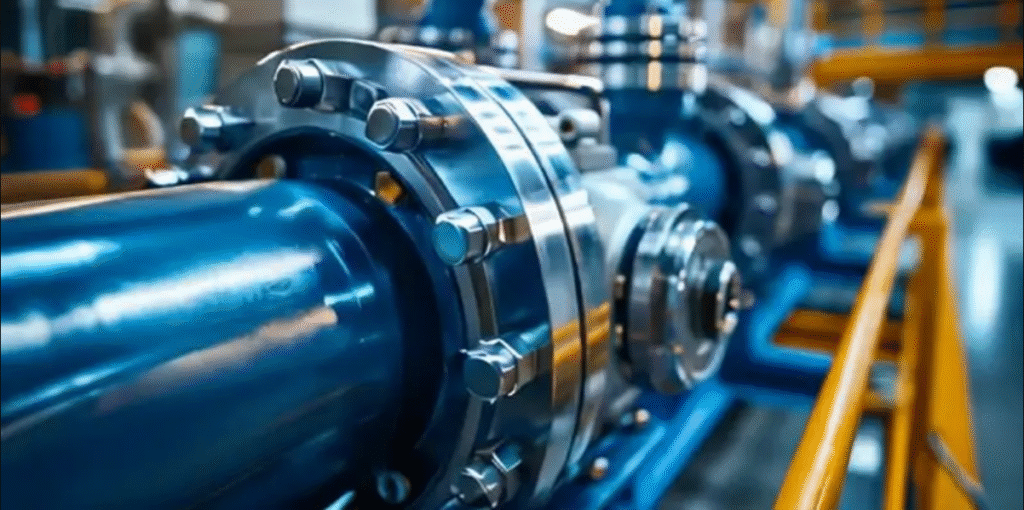
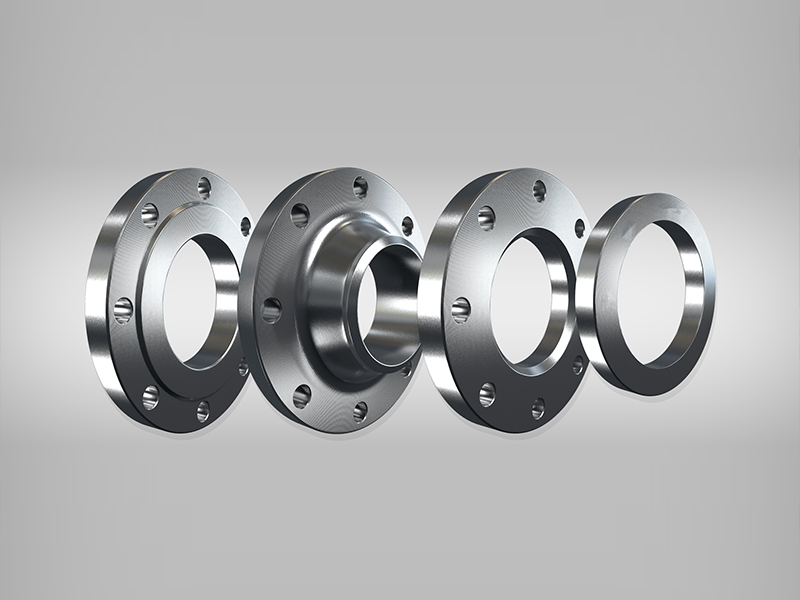
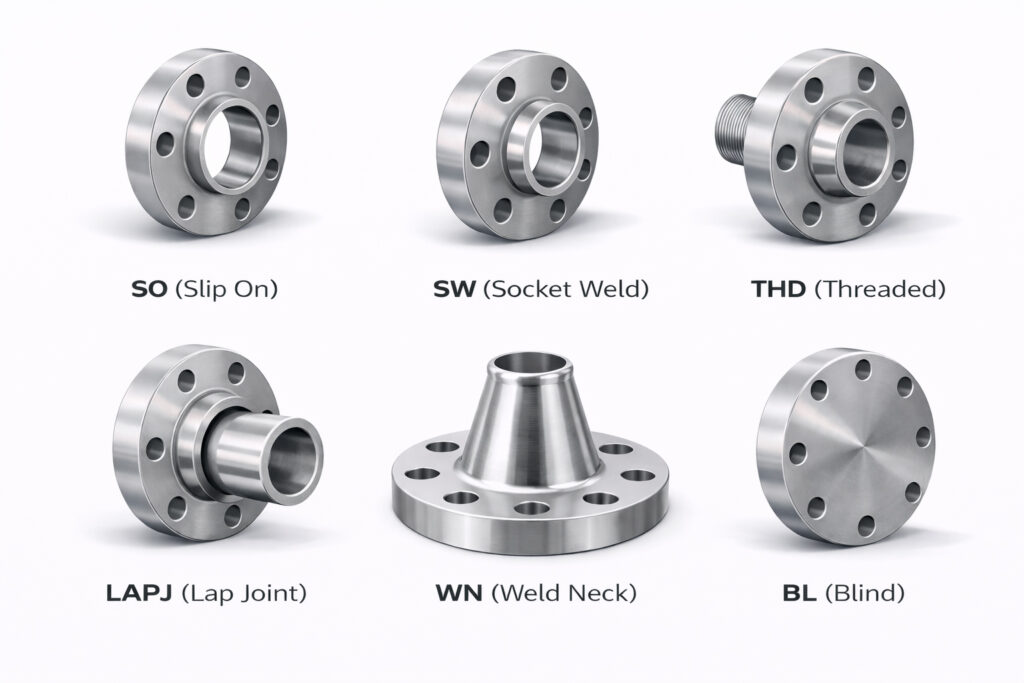
Flanges commonly used in oil and gas include various types, the five most common being:
Integral Flanges
It is integrated with equipment or pipelines and is commonly found in the interfaces of equipment such as pumps and valves.
Slip-on Flanges
It connects to the pipeline via fillet welds, making installation simple and suitable for low-pressure pipelines.
Welding Butt Flanges
With a long neck, high weld strength, good sealing performance, and resistance to high pressure and high temperature, it is used in high-pressure pipeline systems for oil and natural gas.
Threaded Flanges
The inner hole is threaded, allowing it to be directly screwed into a threaded pipe without welding.
Loose Flanges
It does not weld directly to the pipeline, making it suitable for corrosive media or scenarios with large temperature differences. It is suitable for pipelines with corrosive media, non-ferrous metal pipelines, and pipelines with large temperature deformation.
The loose-fitting structure can compensate for the thermal expansion and contraction of the pipeline and has good corrosion resistance.
Flange Pressure Ratings
American Standard: Class 150, 300, 600, 900, 1500, 2500; ASME B16.5, ASME B16.47; American standard system engineering, petrochemical, natural gas high-pressure pipelines.
German Standard: PN6, PN10, PN16, PN25, PN40, PN63, PN100, PN160, PN250; DIN EN 1092-1; German standard system engineering, European export projects.
Flange Materials in the Oil and Gas Industry
The flange materials commonly used in oil and gas pipelines are selected based on the operating environment. Common materials include:
Carbon steel: such as Q235 and 20# steel, suitable for general working conditions and with lower cost.
Alloy steel: such as 16Mn and 15CrMo, possessing high strength and heat resistance, used in high-temperature and high-pressure pipelines.
Stainless steel: such as 304 and 316, with good corrosion resistance, used in corrosive media.
Duplex stainless steel: possessing both austenitic and ferritic structures, offering high strength and resistance to pitting corrosion.
Flange Standards
GB: China and parts of Southeast Asia, domestic engineering GB/T 9112-2010, GB/T 9113-2010.
ASME: USA, parts of Europe, petrochemical and natural gas industries ASME B16.5, ASME B16.47.
DIN: Germany, most of Europe, machinery manufacturing industry DIN EN 1092-1.
JIS: Japan and parts of East Asia JIS B2220, JIS B2238.
Installation and Maintenance of Commonly Used Flanges in the Oil and Gas Industry
Before installation, inspect the flange sealing surface to ensure it is free of scratches and rust. The gasket should be centered, and apply an appropriate amount of lubricant to the bolts.
Use a torque wrench to tighten the bolts, tightening them in stages according to the designed torque value. After installation, perform a system pressure test to check for leaks.
Routine maintenance includes periodically checking the bolt tightness and corrosion of the sealing surfaces. On pipelines with significant temperature variations, pay attention to bolt stress relaxation and retighten if necessary.
After long-term operation, the sealing surfaces may wear, requiring repair or replacement.
When disassembling the flange, loosen the bolts slowly first, and only completely remove it after confirming there is no internal pressure. Clean the sealing surfaces of the removed flange and store it properly.
Reusable gaskets should have their resilience checked; those with excessive deformation should be replaced.
FAQ
Q: During flange installation, is it better to tighten the bolts as much as possible?
A: Excessive bolt preload may cause the gasket to crush and fail, or even deform the flange, easily leading to leaks.
Q: Can carbon steel flanges be used in oil pipelines?
A: Carbon steel flanges can be used in oil pipelines. Oil pipelines operate under medium to high pressure, normal temperature, or medium to low temperature conditions, and the transported oil medium is not highly corrosive, making medium to high pressure carbon steel flanges suitable.
To learn more about flange manufacturing, you can subscribe to Metleader’s YouTube channel for more information.