Lap flanges are the best choice for pipe connection solutions.
Table of contents
- Preface
- What is a lap flange?
- Classification of lap flanges
- Structure of lap flanges
- Characteristics of lap flanges
- Applications of lap flanges
- Lap flanges vs. loose flanges
- Usage methods of lap flanges
- Precautions for using lap flanges
- Summary
Preface
Lap flanges are very common in piping applications and are the best choice for many industrial piping connection solutions.
Understanding the basic characteristics of lap flanges can help us better select suitable pipe fittings. This article will discuss why lap flanges are so important, hoping to be helpful to you.
Metleader, as one of China’s largest flange and pipe fitting manufacturers, consistently provides customers with high-quality products. To learn more about Metleader, you can visit YouTube or LinkedIn.
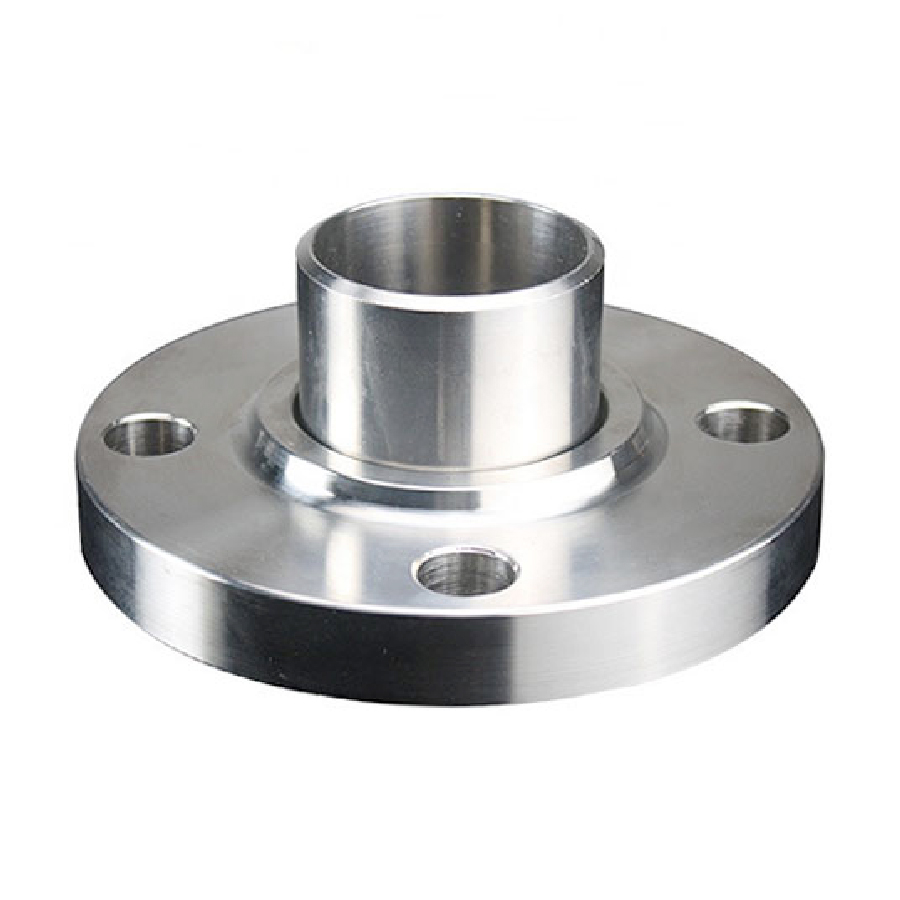
What is a lap flange?
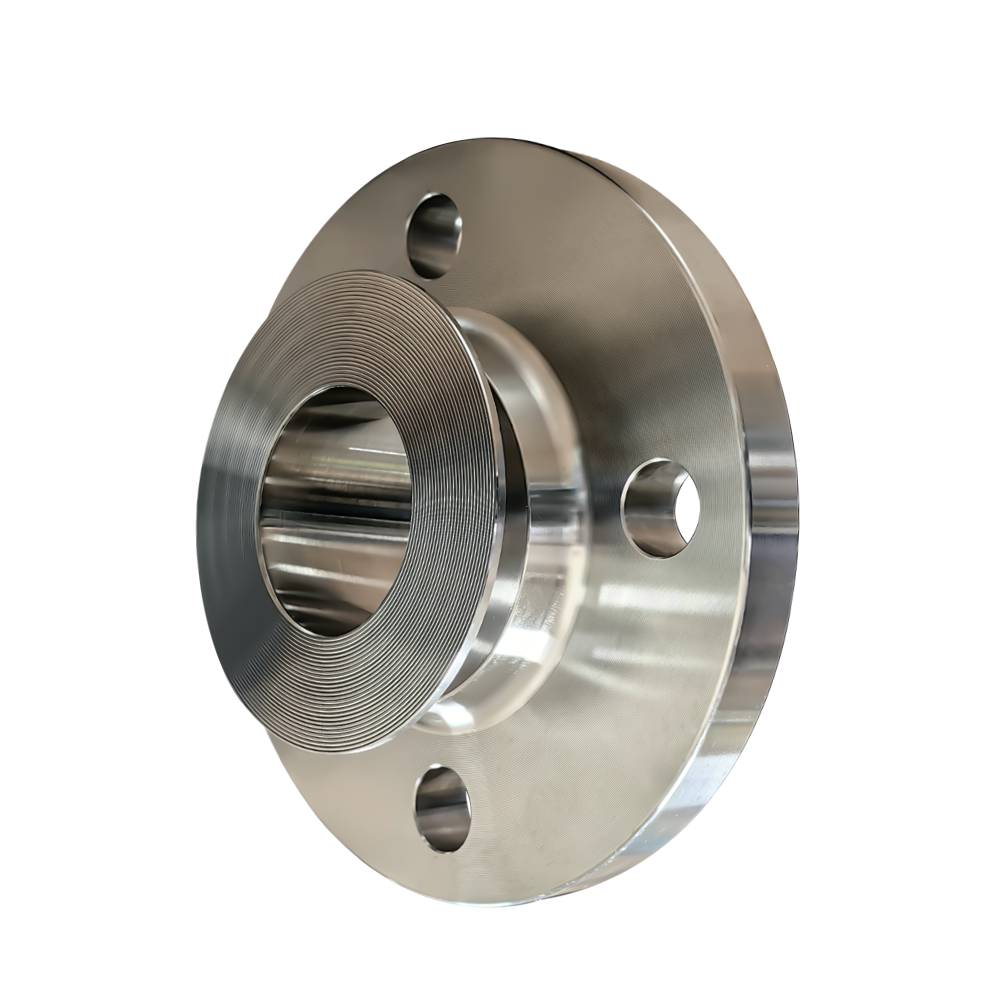
Lap flanges are a common connection method in piping systems, referring to a method of fastening two flanges by overlapping their joint surfaces.
Therefore, they are also known as “cross-lap flanges” or “sliding flanges.”
Classification of lap flanges
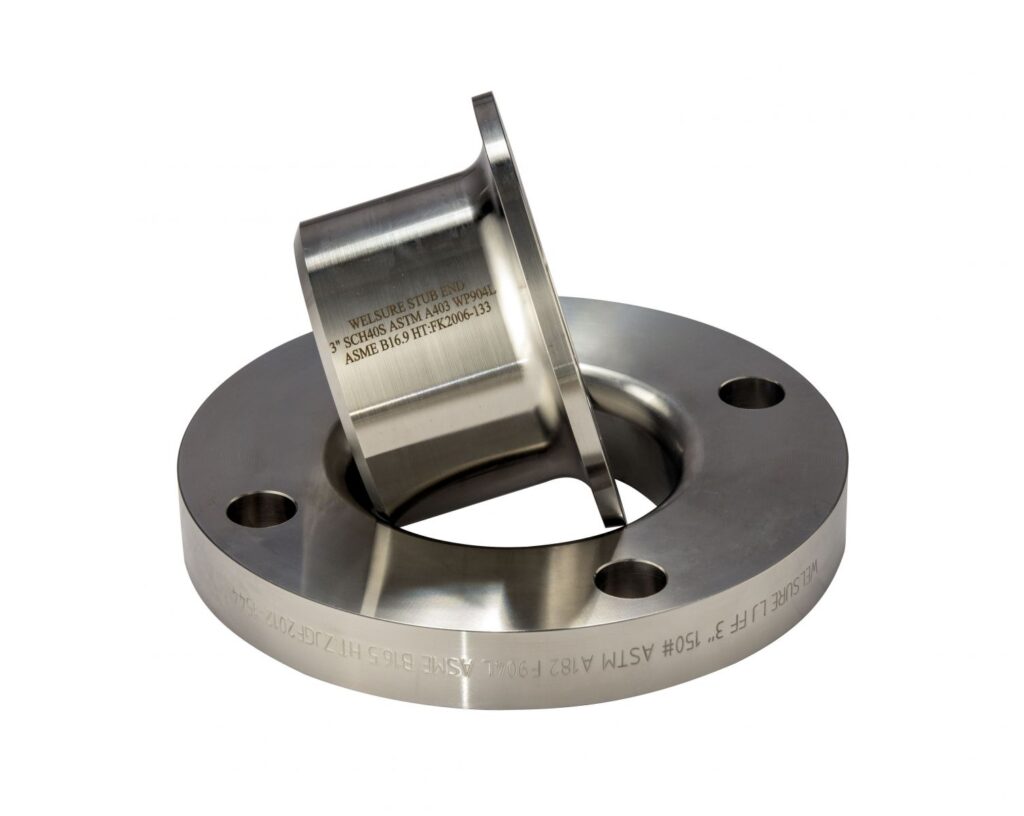
Based on their structure, lap flanges can be classified into the following types:
Sliding flange: The inner ring surface is uniform, and the connection thread with the flange is very tight to prevent leakage.
Tee sliding flange: This flange is used for tee pipes, with a protruding intermediate component connecting the inner and outer rings.
Sliding flange with fixing nut: This design is more practical and easier to use.
Double lap flange: This design uses two flanges, each with a lap ring on the outer side.
Structure of lap flanges
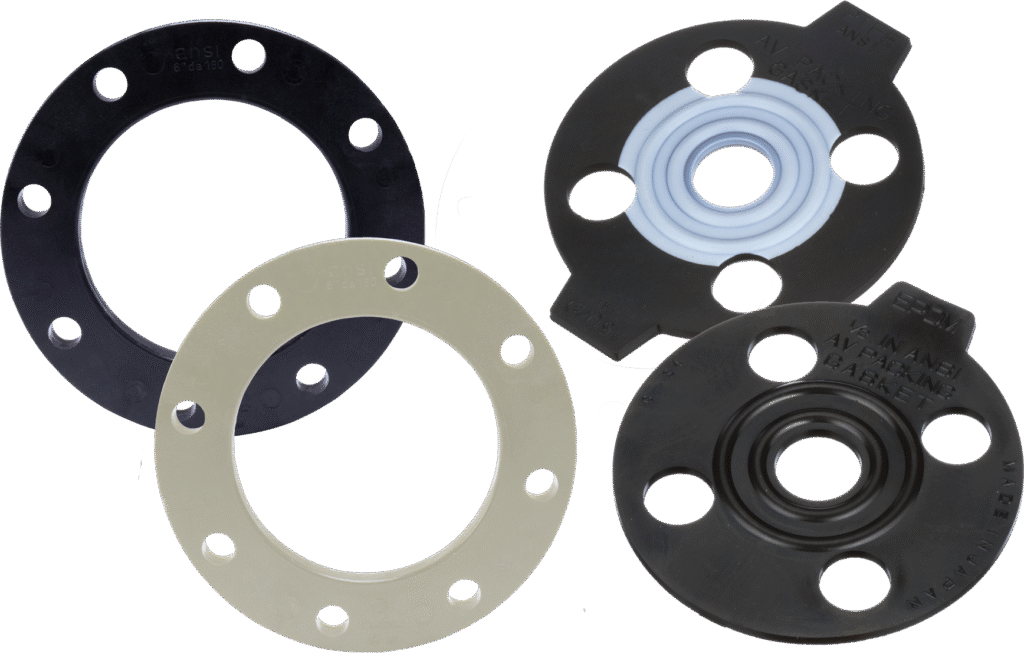
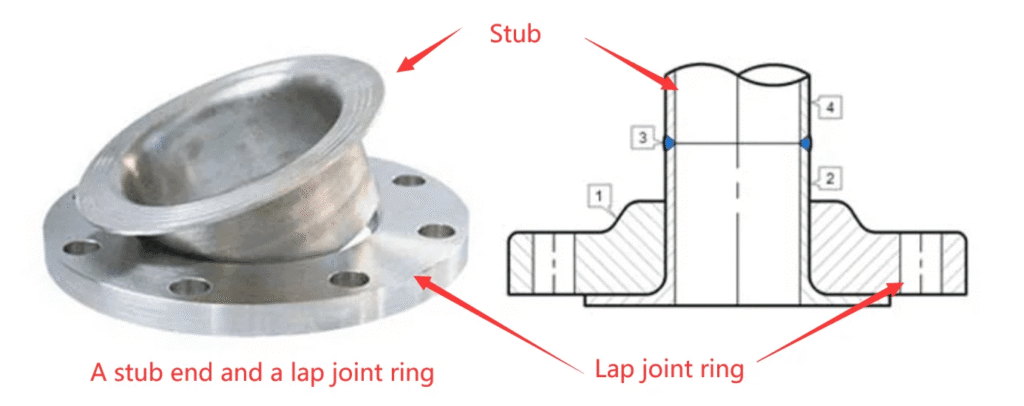
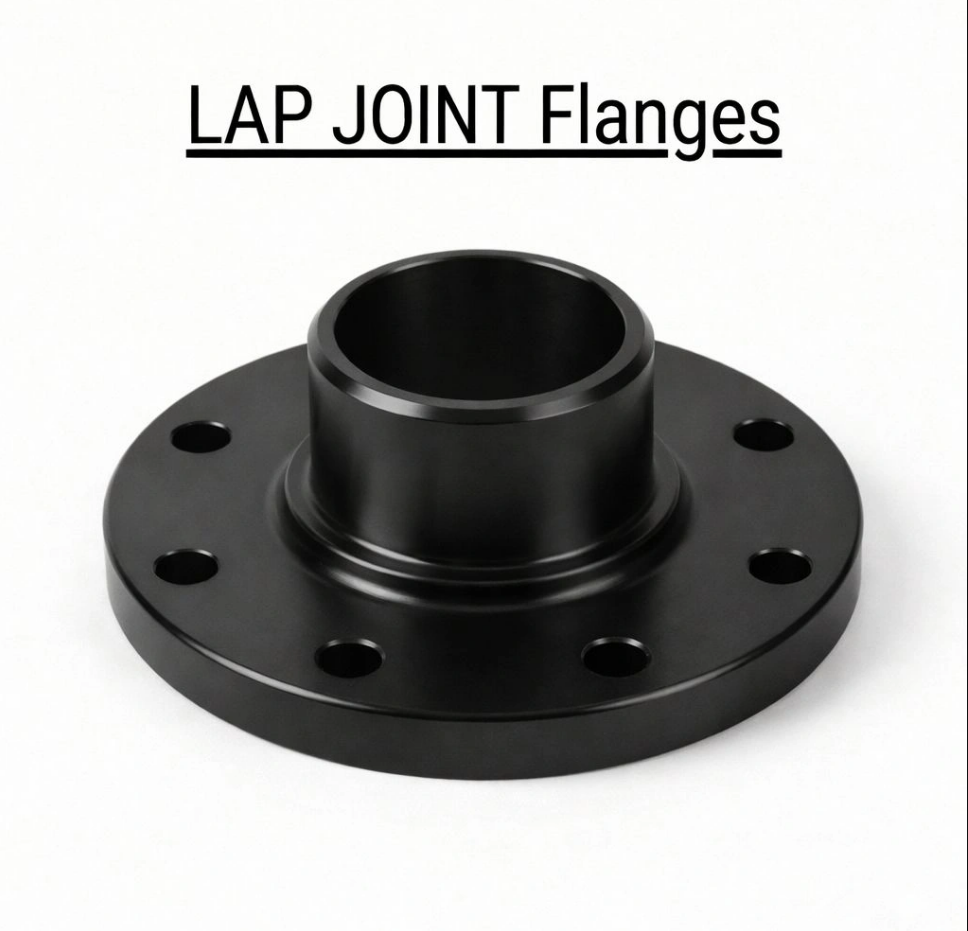
A lap flange mainly consists of four parts:
- Short Section: This component is welded to the pipe and serves as a seal.
- Lap Flange: The flange is fitted over the pipe and abuts against the short pipe end.
- Bolts and Nuts: These fasteners secure the lap flange to the short pipe end, ensuring a tight and leak-proof connection.
- Gasket: The gasket is placed between the flange face and the short pipe end to provide a seal and prevent leakage.
Characteristics of lap flanges
In piping systems with large spans and heavy weights, lap flanges are often used instead of other connection methods because they offer the following advantages:
- Adjustable structural length.
- Simple installation, requiring no welding.
- No stress concentration due to excessive connection during installation.
- Suitable for various pipe sizes.

Applications of lap flanges
Lap flanges are used almost everywhere:
Piping systems: Piping connection hubs in industries such as petroleum and chemical engineering
Equipment interfaces: Transitional connections between pumps, valves, and other equipment and pipelines
Temporary modifications: Quick docking solutions for emergency maintenance
System expansion: Facilitating the addition of branch lines or equipment later.
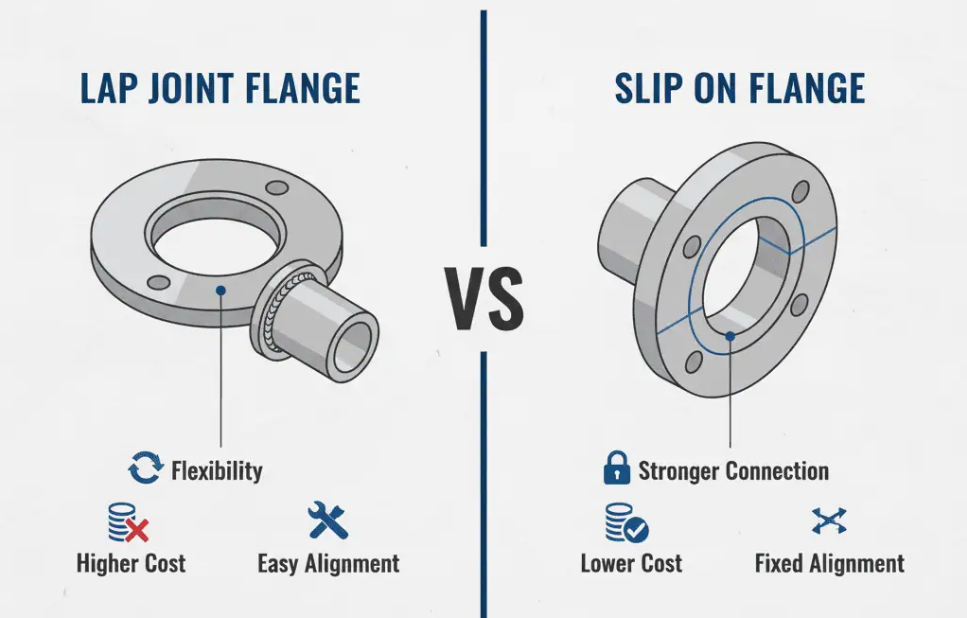
Lap flanges vS. loose flanges
Structurally
lap flanges are tightly connected by bolts, with an overlap length between the flange faces; while loose flanges have a gap between them and the pipe, allowing the flange to slide freely.
Sealing Performance
lap flanges offer higher sealing performance and are suitable for high-pressure, high-temperature applications; loose flanges have relatively poorer sealing performance and require auxiliary materials to improve the sealing effect.
Applications
lap flanges are widely used in various industrial piping systems; loose flanges are mainly used in piping systems that require frequent disassembly or relocation.
Usage methods of lap flanges
Install the lap flanges at both ends of the pipes to be connected, ensuring coaxiality between the flanges and the pipes.
Place a suitable gasket between the flanges to improve the sealing performance of the connection.
Pass the bolts through the bolt holes of the flanges and tighten the nuts to ensure the two flanges are tightly fitted. Note that the bolts should be tightened gradually in a diagonal sequence to ensure even stress on the flanges.
Check that the flange connection is secure and there are no loose parts before putting the pipes into use.
Precautions for using lap flanges
During installation, avoid using excessive torque to tighten the bolts, as this may damage the flange or affect the sealing performance.
Regularly inspect the connection status of the lap flange. If loosening or leakage is found, address it promptly.
For lap flange connections under special operating conditions such as high temperature and high pressure, use high-temperature and corrosion-resistant sealing materials and appropriate fasteners.
When disassembling the lap flange, loosen the nuts and remove the bolts first, then separate the two flanges to avoid damaging the sealing surfaces.
Summary
This introduction should have given you a more comprehensive understanding of how to use lap flanges. In practical applications, it is essential to follow the correct installation steps and precautions to ensure the stability and safety of pipe connections.
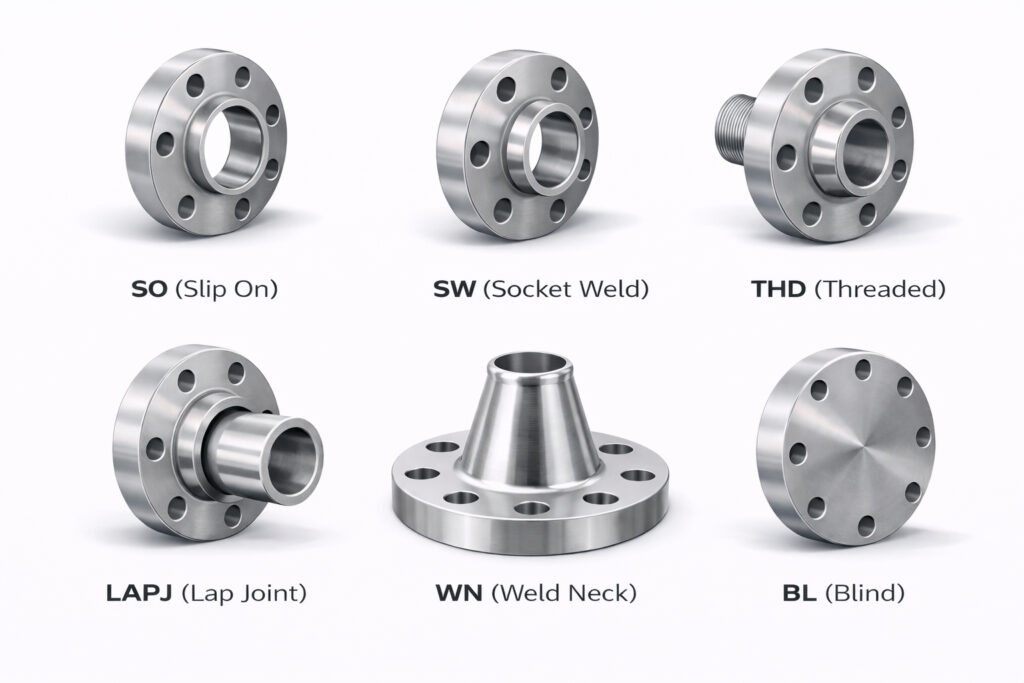
If you are unsure which type of flange to use for your project, you can consult Metleader’s online engineers for professional guidance and complete solutions.
For more information on flange types and the latest prices, please contact Metleader.