How to choose the right carbon steel flange?
Table of Contents
- Preface
- Carbon Steel Flange Operating Parameters
- Carbon Steel Flange Sealing Surface Types
- Carbon Steel Flange Types
- Carbon Steel Welding Flange Specifications
- Carbon Steel Flange Materials
- Carbon Steel Flange Standards
- Carbon Steel Flange Selection
- How to Inspect Carbon Steel Flanges?
- Carbon Steel Flange Packaging
- Summary
Preface
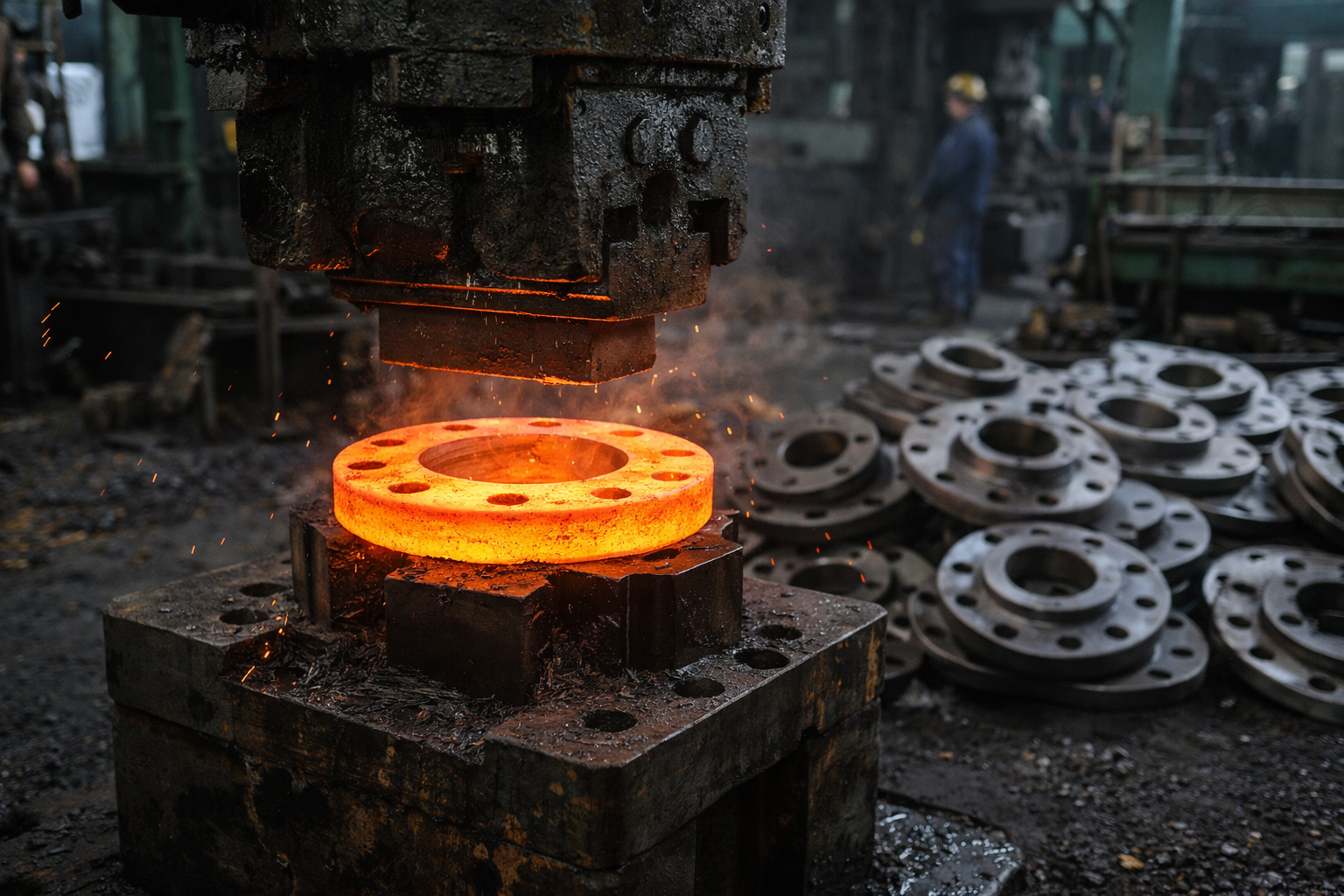
Carbon steel flanges are commonly used connection components in piping engineering, connecting pipes, valves, or equipment into a complete system via bolts.
Their core function is to provide a stable sealing structure while accommodating pipe deformation caused by temperature changes or media pressure.
Carbon steel is widely used in industrial piping, building water supply and drainage, and chemical equipment due to its high strength and moderate cost, and is particularly suitable for applications requiring high pressure or corrosive media.
Metleader focuses on producing high-quality flange products at competitive prices. For more information about Metleader, please follow us on YouTube and LinkedIn.
Carbon Steel Flange Operating Parameters
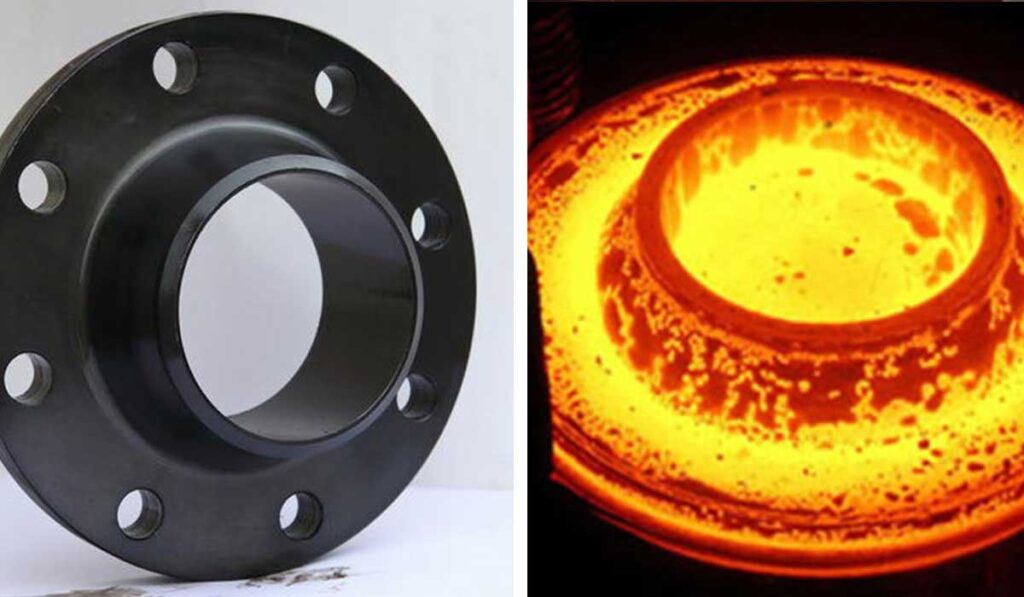
The selection of carbon steel flanges requires comprehensive consideration of four major parameters: nominal pressure, nominal diameter, operating temperature, and the medium being transported.
The nominal pressure should meet the design pressure requirements and be adjusted for temperature; the nominal diameter must match the pipeline or valve; the operating temperature affects the material’s temperature resistance and pressure reduction factor; and the characteristics of the transported medium determine the material’s corrosion resistance and sealing performance requirements.
Carbon Steel Flange Sealing Surface Types
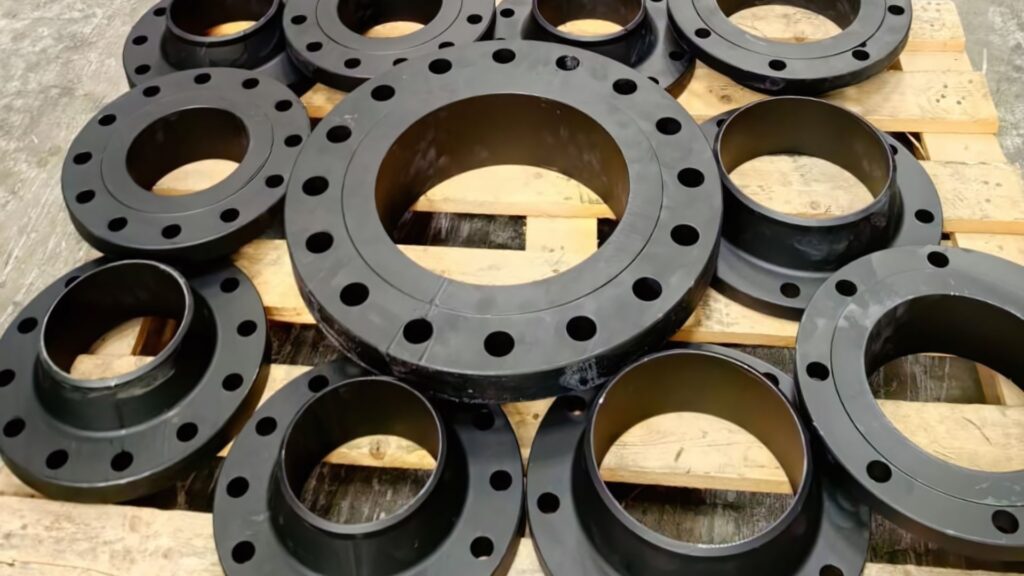
The design of carbon steel flange sealing surfaces is matched according to pressure rating and media hazard. Low-pressure, general media typically use RF raised face seals; medium-pressure, generally corrosive media use M/FM raised face seals; high-pressure, hazardous media use TG tongue and groove seals; ultra-high temperature and high-pressure conditions use RJ ring seals; and low-pressure, light-load conditions use FF full-face seals.
The core of the overall design lies in selecting the appropriate sealing surface based on the different pressures and media hazards to ensure leak-proof capability.
Carbon Steel Flange Types
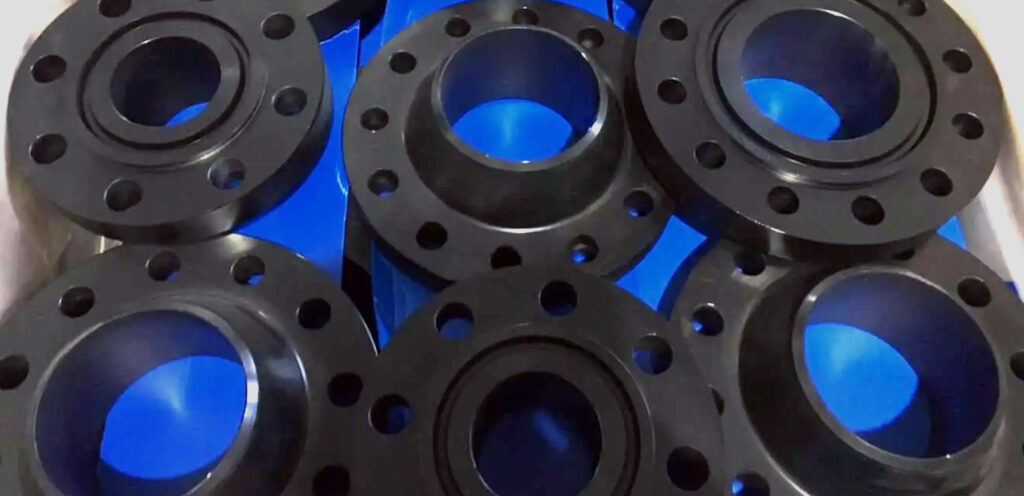
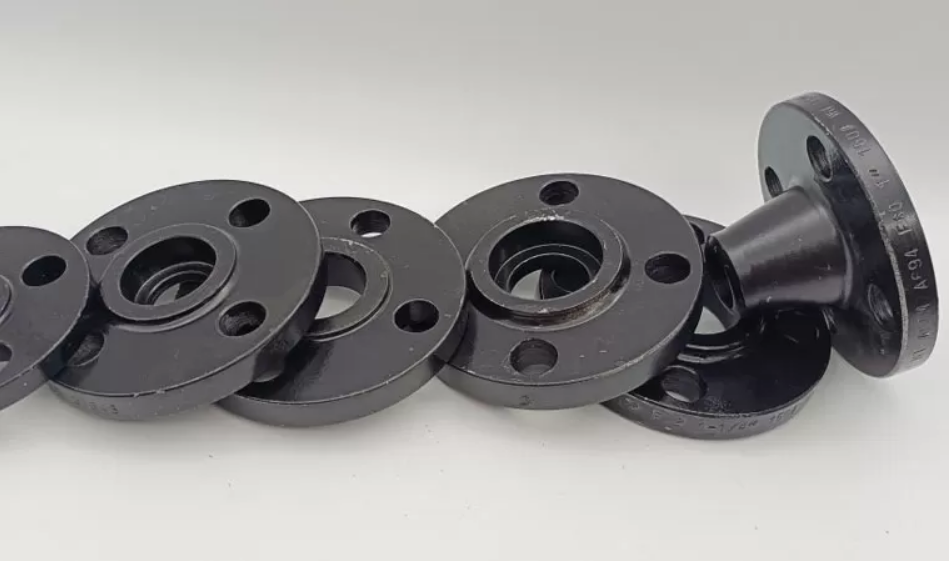
Flanges are classified by structure into PL flat-face welded flanges, SO flat-face welded flanges with necks, WN weld neck flanges with butt joints, SW socket weld flanges, Th threaded flanges, and BL blind flanges.
Among them, PL flat-face welded flanges are suitable for low-pressure, large-diameter, low-cost applications; SO flat-face welded flanges with necks are suitable for medium-pressure, small-diameter applications; WN weld neck flanges with butt joints are suitable for high-pressure, high-temperature, and hazardous media; SW socket weld flanges are suitable for small-diameter, high-pressure applications; Th threaded flanges are suitable for applications where welding is prohibited; and BL blind flanges are used for pipeline sealing.
Carbon Steel Welding Flange Specifications
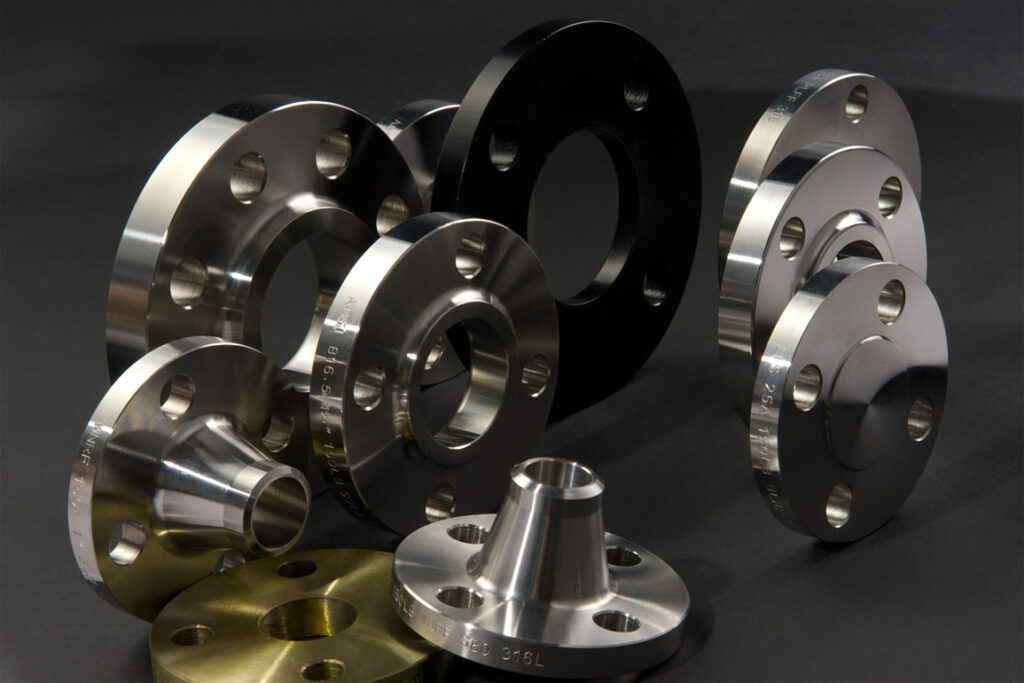
| Shape Type | Regular and Long Neck |
| Sealing Face | RF, FF, FTJ |
| Size Range | 1/2″ – 60″/ DN15 – DN1200 |
| Pressure Rating | Class 150, 300, 600, 900, 1500, 2500lb |
| Standard | ASME B16.5, ASME B16.47 Series A/B |
| Carbon steel | ASTM A105 / A105N |
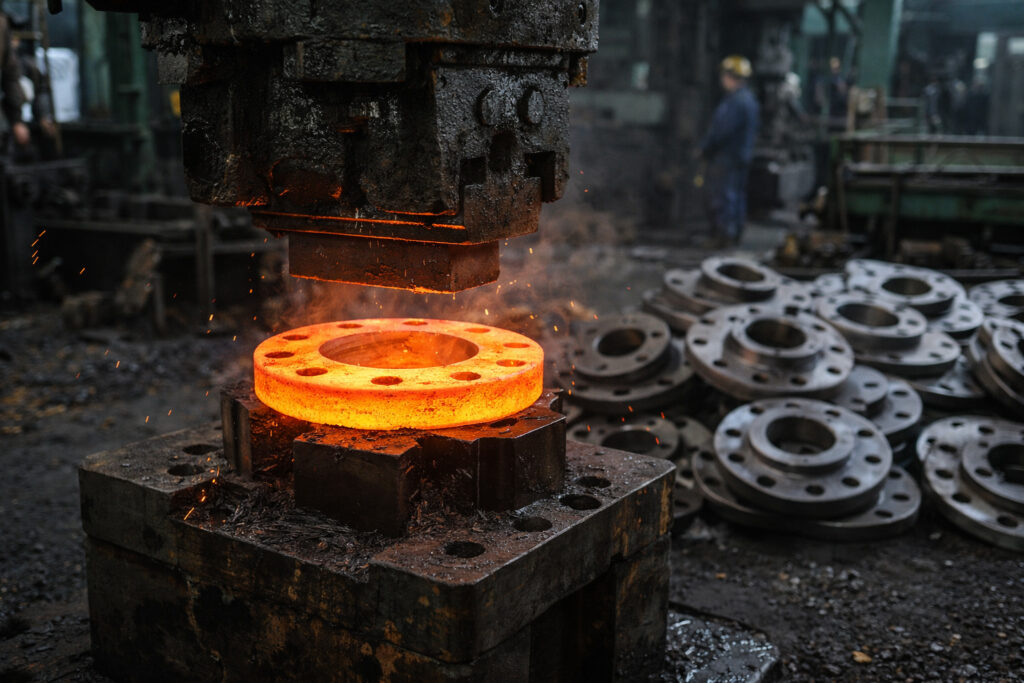
Carbon Steel Flange Materials
The selection of flange materials requires comprehensive consideration of corrosion resistance, temperature resistance, strength, and compatibility with the pipeline.
Carbon steel, due to its lower cost, is suitable for pipeline connections with conventional non-corrosive media; while stainless steel, due to its excellent corrosion resistance, is particularly suitable for applications requiring high corrosivity or cleanliness.
Alloy steel, due to its high strength and resistance to high temperatures and pressures, is suitable for high-temperature and high-pressure pipeline systems; for highly corrosive environments, special alloy materials must be selected.
Carbon Steel Flange Standards
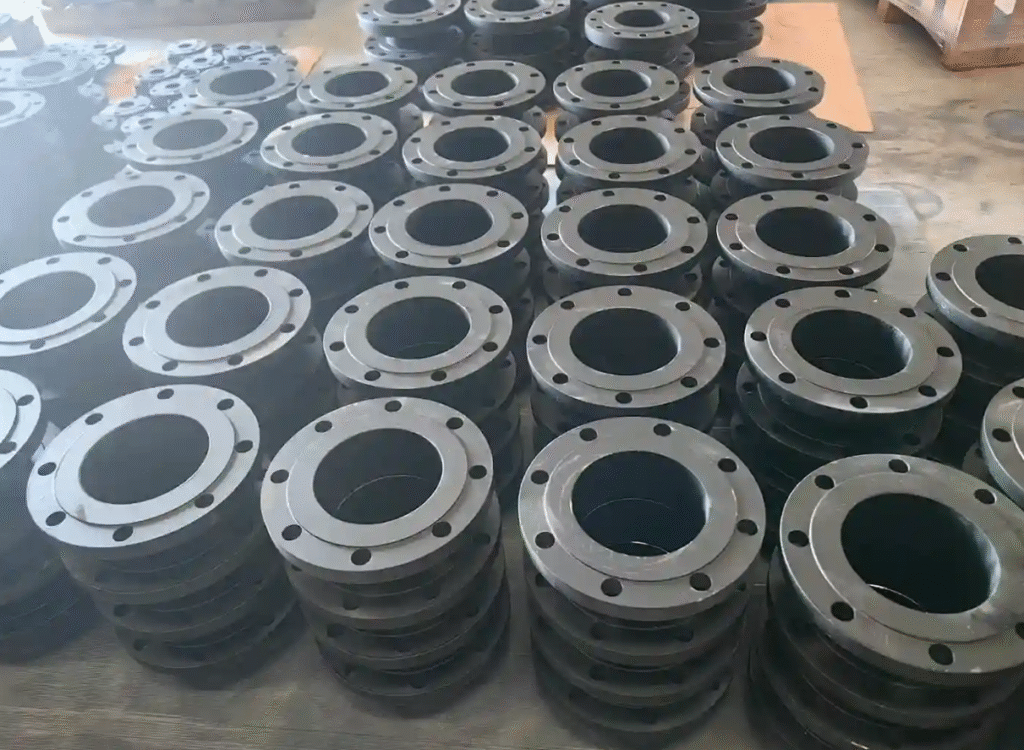
Flanges, as crucial connecting components in piping systems, must be designed and selected in accordance with mainstream domestic and international standards, including GB, HG, ANSI, and EN.
To ensure the uniformity and safety of piping systems, a single standard should be strictly followed for the same piping system, and the use of PN and Class interchangeably is strictly prohibited.
Carbon Steel Flange Selection
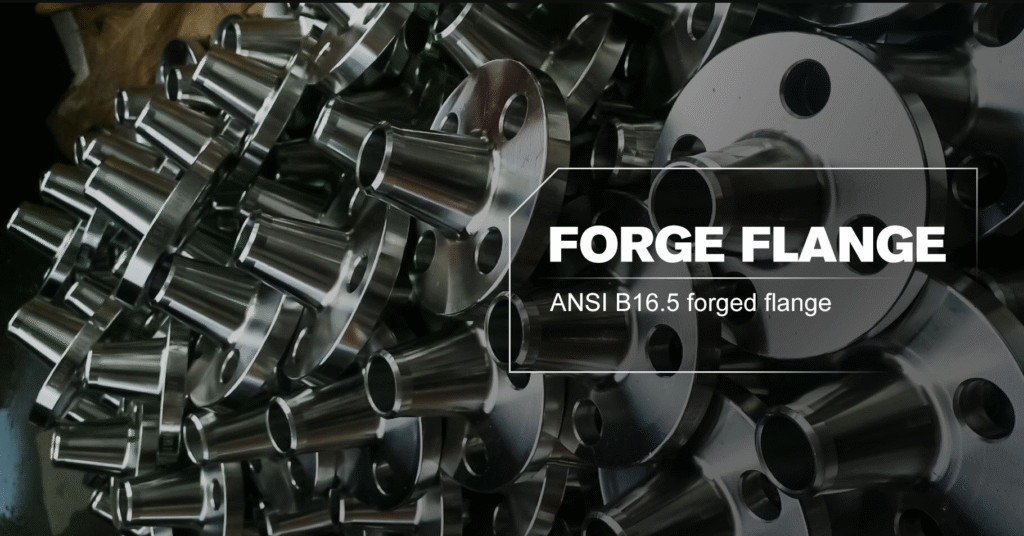
The selection process for carbon steel flanges should follow a seven-step procedure: “Check operating conditions → Determine pressure rating → Select sealing surface → Select flange type → Select material → Verify standards → Match accessories”.
How to Inspect Carbon Steel Flanges?
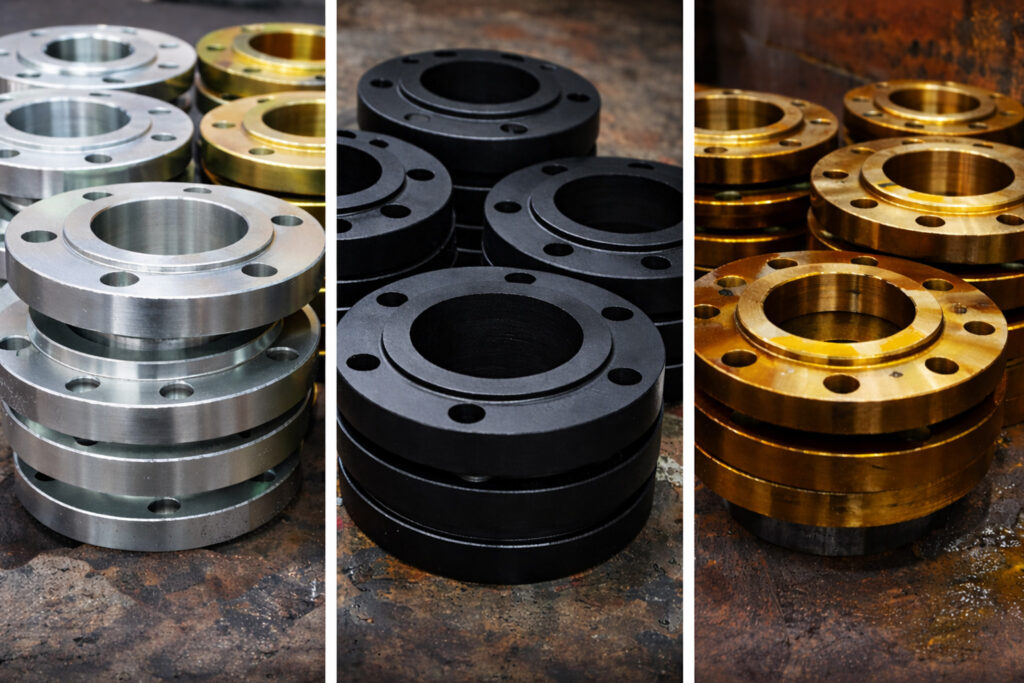
We have very strict inspection procedures for our products. First, we inspect the inner and outer surfaces of the flanges to ensure they are smooth and free of obvious defects.
Then, we measure the dimensions according to standards, followed by measuring the tensile strength and elongation at break of the flange material to evaluate its mechanical strength and ductility.
Weight tests are performed on the flanged piping systems to ensure that the flanges operate without leakage or deformation within the design pressure range.
Carbon Steel Flange Packaging
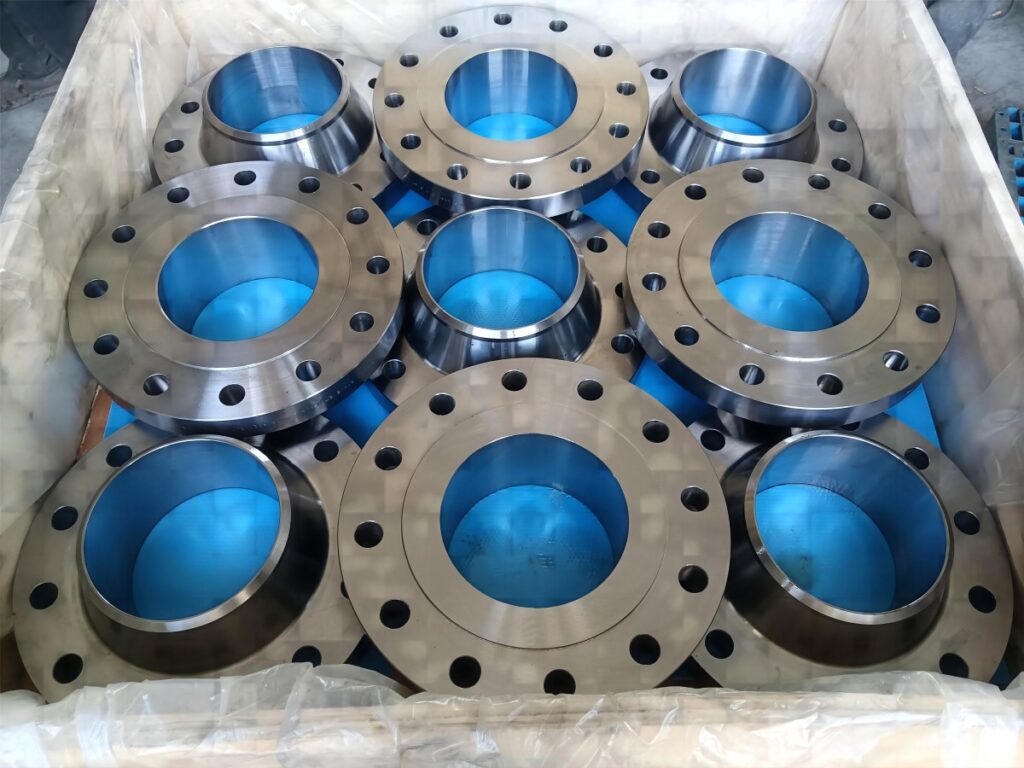
Carbon steel flanges are typically packaged in wooden crates or pallets. Foam or bubble wrap is usually wrapped around the flange to reduce direct contact with other hard objects and prevent damage during transport.
Due to the nature of carbon steel, the flanges require rust prevention treatment before crating or palletizing, such as applying a layer of oil, to ensure they do not rust and maintain their performance upon arrival.
Summary
Carbon steel flanges are an economical and practical pipe fitting. With proper selection and standardized use, they can meet the needs of most industries.
Their performance balances cost, strength, and applicability, making them a fundamental component of piping systems.
Metleader, as one of China’s largest flange manufacturers, provides high-quality flange products to customers worldwide.
If you have any needs, please contact Metleader’s engineers; we will provide complete steel solutions.