API 5L vS API SPEC 5CT: A Beginner’s Guide
Contents
- API Steel Pipe Specifications
- What is API 5L?
- API 5L Grade Introduction
- API 5L Oil Line Pipe Product Specifications
- Applications of API 5L Steel Pipe
- Relationship between API 5L Steel Pipe and Carbon Steel
- What is API SPEC 5CT?
- API SPEC 5CT Dimensional Specifications
- API SPEC 5CT Oil Casing Materials
- API SPEC 5CT vs API 5L
- Summary
API Steel Pipe Specifications
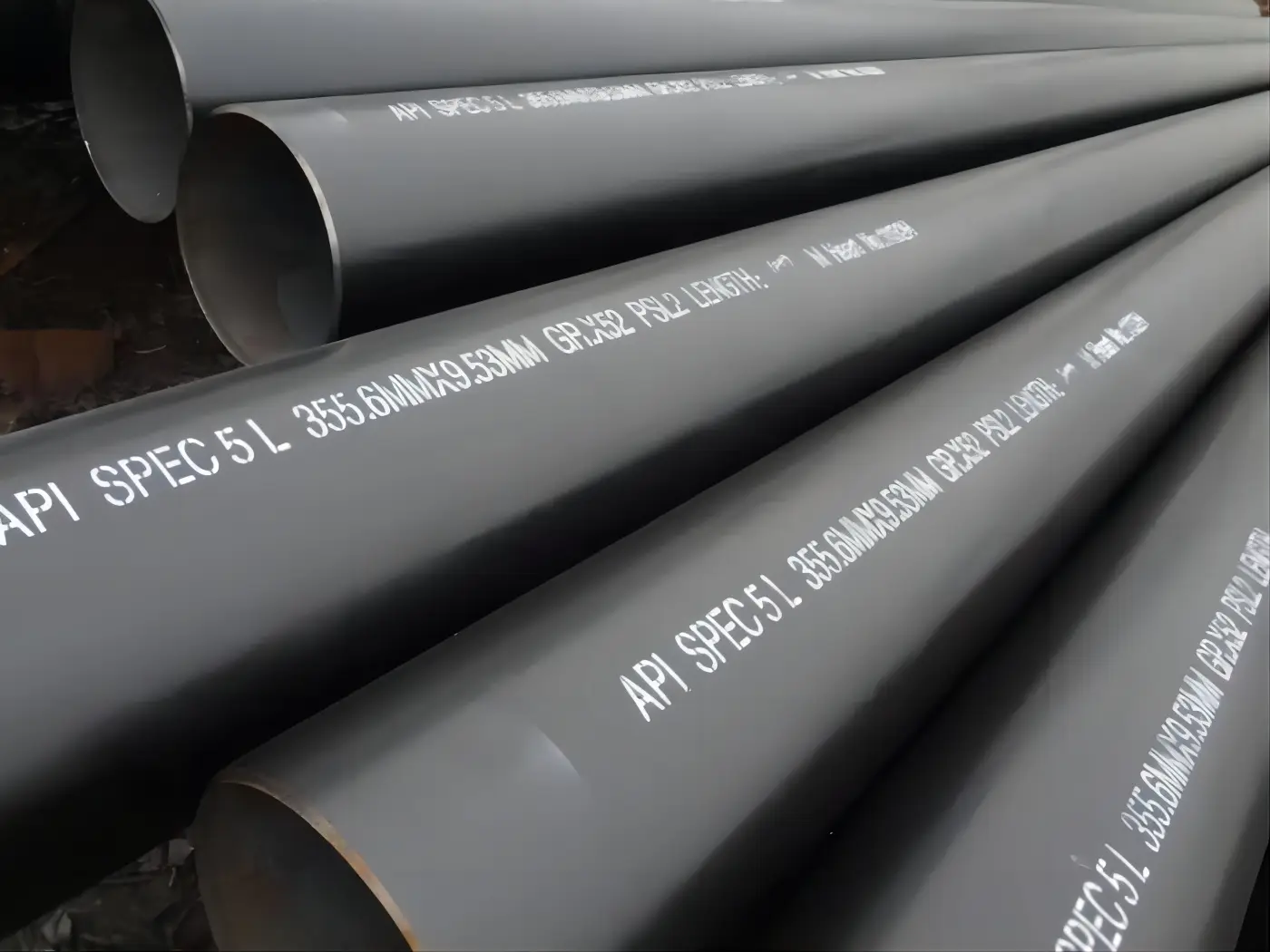
API 5L: API 5L is a type of steel pipe used for transporting natural gas, oil, and water. It features high strength, excellent corrosion resistance, and excellent weldability.
API 5CT: API 5CT is a type of steel pipe used in the oil and gas industry for casing and tubing. It offers high-temperature and corrosion resistance and is commonly used in oil well casing and tubing.
API 5D: API 5D is a type of steel pipe used in the oil and gas industry for drill pipe. It features high strength and corrosion resistance and is commonly used in oil drilling operations.
What is API 5L?
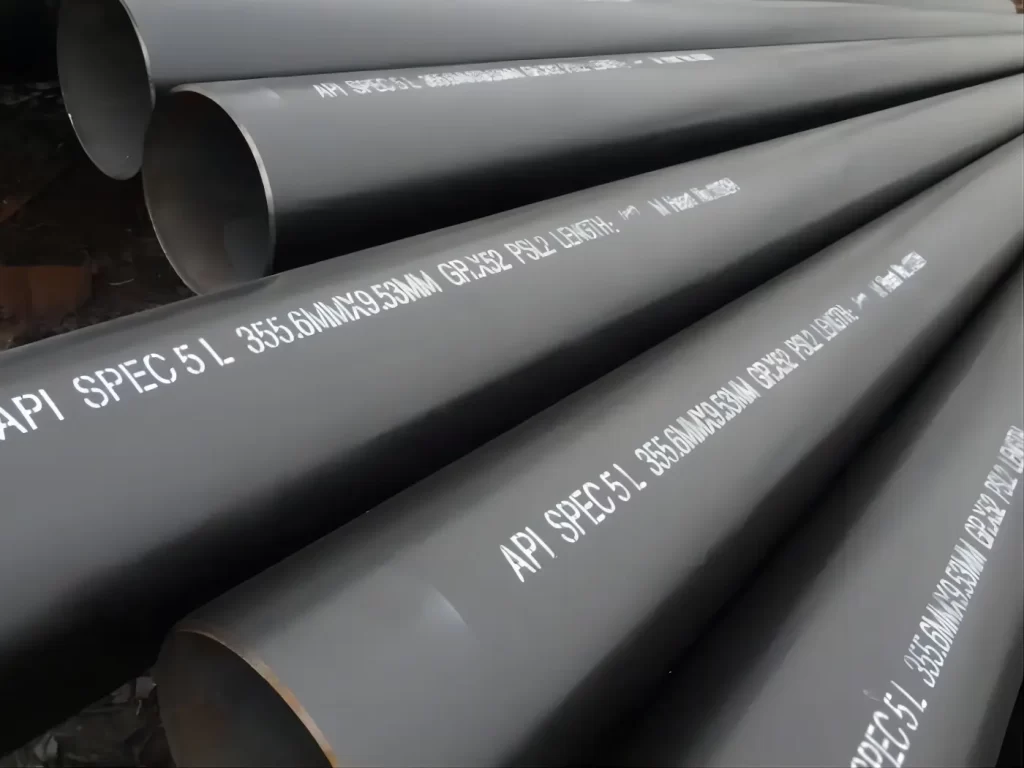
API 5L standard is the core of AFI pipeline steel pipe standards, which provides detailed provisions on the manufacturing process, mechanical properties, chemical composition and dimensions of pipeline steel pipes.

API 5L Grade Introduction
According to the API 5L standard, line pipe grades are classified into two types: API 5L PSL1 and API 5L PSL2.
API 5L PSL1 requires the steel pipe to meet certain chemical composition, mechanical properties, and dimensions. It is suitable for general transportation applications such as natural gas, oil, and water.
API 5L PSL2 imposes more stringent requirements on steel pipe, with stricter limits on chemical composition, mechanical properties, and dimensions.
PSL2 also provides additional technical requirements, such as impact testing, nondestructive testing, and weld pass rates.

API 5L Oil Line Pipe Product Specifications
- Standards: API5L, ASTM, ASME B36.10, DIN
- Material: API5LGr.B, A106Gr.B, A105Gr.B, A53Gr.B, A243WPB, etc.
- Outer Diameter: 13.7mm-1219.8mm
- Wall Thickness: 2.11mm-100mm
- Lengths: 5.8m, 6m, 11.6m, 11.8m, 12m (fixed lengths)
- Packaging: Painted, beveled, capped, galvanized steel strapping, yellow lifting strapping, and packaged in woven bags.

Applications of API 5L Steel Pipe
API 5L steel pipes are widely used in the oil and gas industry.
They are used to lay long-distance oil and gas pipelines, connecting oil fields, refineries, storage facilities, and end users.
They are a key component in the efficient transportation of oil and gas.

Relationship between API 5L Steel Pipe and Carbon Steel
Carbon steel is one of the primary materials used for API 5L steel pipe.
API 5L standard steel pipes are primarily manufactured from low-carbon steel and some medium-carbon steel.
The API 5L standard also allows for the addition of certain alloying elements, such as manganese, silicon, and chromium, to enhance specific properties, such as high- and low-temperature resistance and corrosion resistance.
What is API SPEC 5CT?
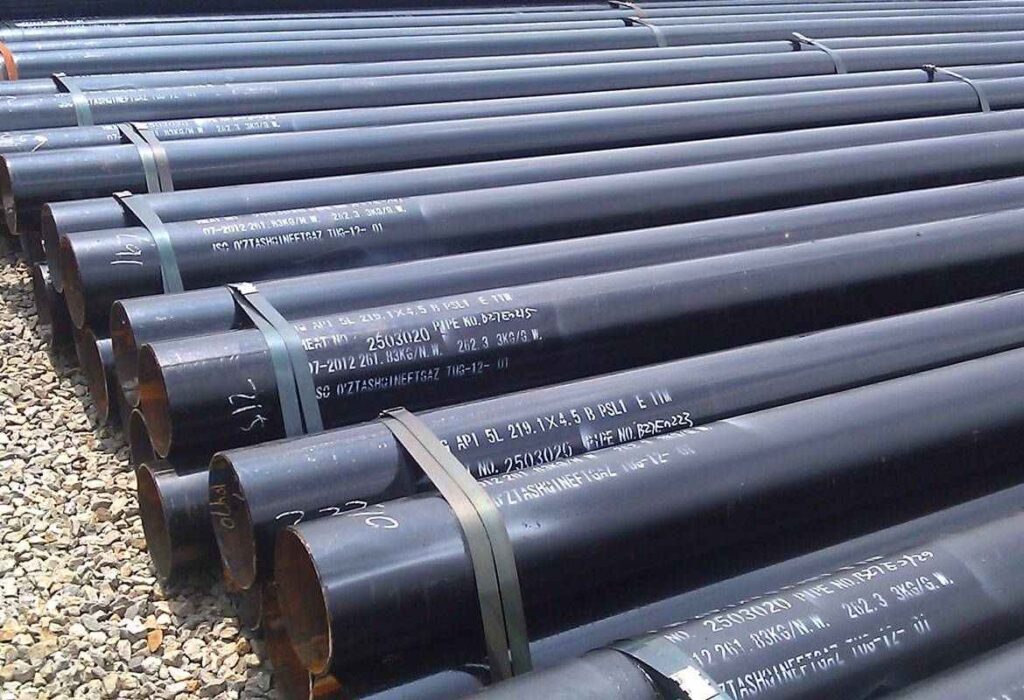
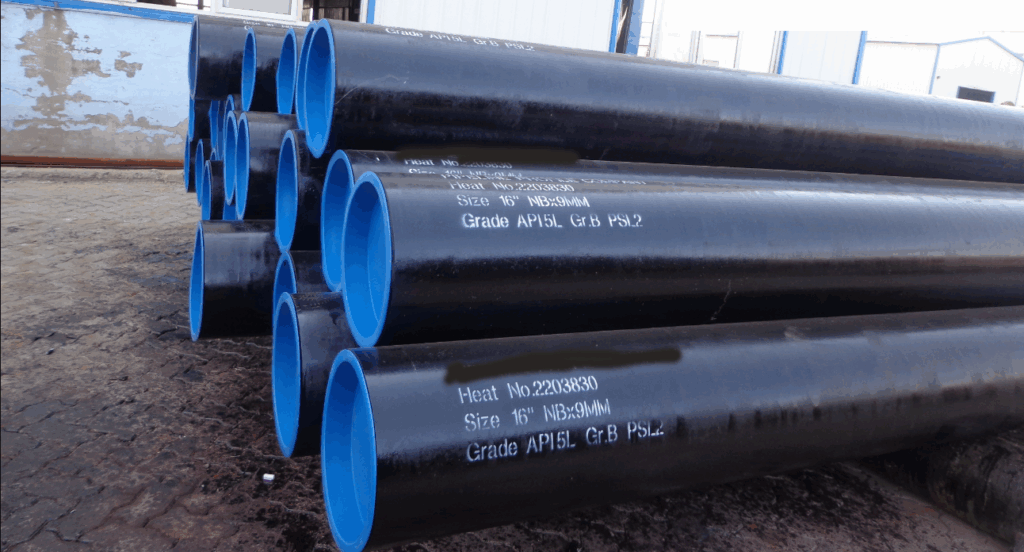
API SPEC 5CT is a technical specification for oil casing published by the American Petroleum Institute, primarily used in oil and gas production.
It specifies the steel grade system, chemical composition, mechanical properties, dimensional tolerances, and other technical specifications for casing and tubing.
API SPEC 5CT Dimensional Specifications
The standard clearly stipulates the geometric dimensions of the product:
Outer Diameter Tolerance:
- ≤101.60mm, ±0.79mm tolerance allowed.
- ≥114.30mm, +1.0%/-0.5% tolerance applied.
Wall thickness deviation is controlled within the range of 0 to -12.5%
Length Classification:
- Casing is divided into three categories: 4.88-7.62m, 7.62-10.36m, and 10.36-14.63m.
- Tubing length standard is 6.10-9.75m.
API SPEC 5CT Oil Casing Materials
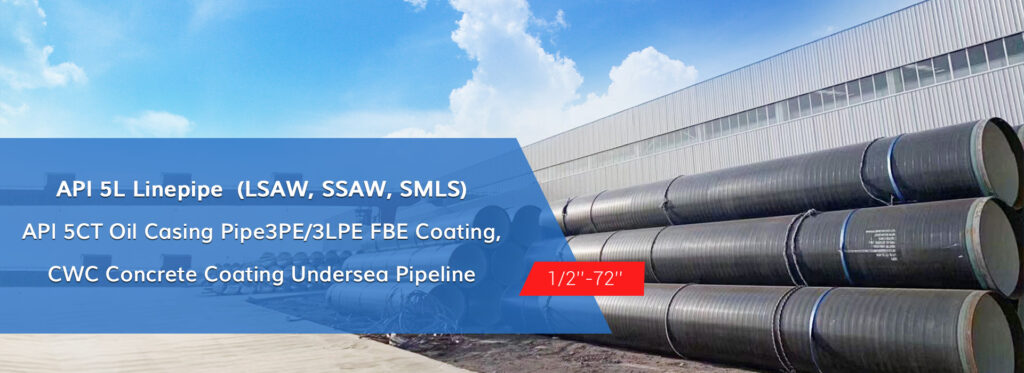
Common oil casing materials are mainly carbon steel.
API SPEC 5CT defines several different grades of carbon steel materials, such as J55, K55, N80, L80, and P110, based on different strength requirements.

API SPEC 5CT vS API 5L
| Feature | API SPEC 5CT | API 5L |
| Primary Application | Oil well casing and tubing | Pipeline transportation systems |
| Product Type | Seamless and ERW casing/tubing | Seamless and welded line pipe |
| Service Environment | Downhole oil/gas production | Surface oil/gas/water transmission |
| Standard Length | Ranges 1-13m (tubing), 5-14m (casing) | Typically 6-12.5m or 18-24m |
| Parameter | API SPEC 5CT | API 5L |
| Material Grades | H40, J55, K55, N80, L80, C90, T95, P110 | A25, A, B, X42, X52, X60, X65, X70, X80 |
| Testing Emphasis | Hydrostatic, flattening, hardness tests | Hydrostatic, nondestructive, Charpy impact |
| Connection Types | API threaded (BTC, LTC, STC), premium | Plain end, beveled, or threaded |
| Wall Thickness | Defined by weight classes (e.g., 17#, 20#) | Defined by schedule (e.g., SCH40, SCH80) |

Summary
After reading this article, I believe you’ve understood the differences between API 5L and API SPEC 5CT. This will help you better select the appropriate steel pipe and ensure safer and more efficient project operations.
As with all steel pipe products, quality is always our top priority at Metleader. This is the foundation of our company.
If you’re interested in purchasing steel pipe or learning more about Metleader, please subscribe to our YouTube channel and LinkedIn.