Concentric reducers and eccentric reducers: when and how to use them
Concentric reducer VS eccentric reducer: material differences
| Material Differences | Concentric Reducer | Eccentric Reducer |
|---|---|---|
| Design | Symmetrical design with a central axis | Asymmetrical design with an offset |
| Flow Characteristics | Provides smooth transition for fluid flow, minimizing turbulence | Introduces turbulence due to the offset configuration |
| Pressure Rating | Typically has a higher pressure rating | May have a slightly lower pressure rating compared to concentric reducers |
| Usage | Commonly used when maintaining a consistent fluid velocity is critical | Preferred when preventing air or gas pocket accumulation is important |
| Applications | – Petrochemical industries | – Pump suction nozzle applications |
| – Oil and gas pipelines | – Pipe rack design | |
| – Chemical processing plants | – Slurry lines | |
| – Water treatment facilities | – Systems with potential air or gas pockets | |
| Alignment during Installation | Easier to align during installation | Requires careful alignment to avoid issues due to the offset |
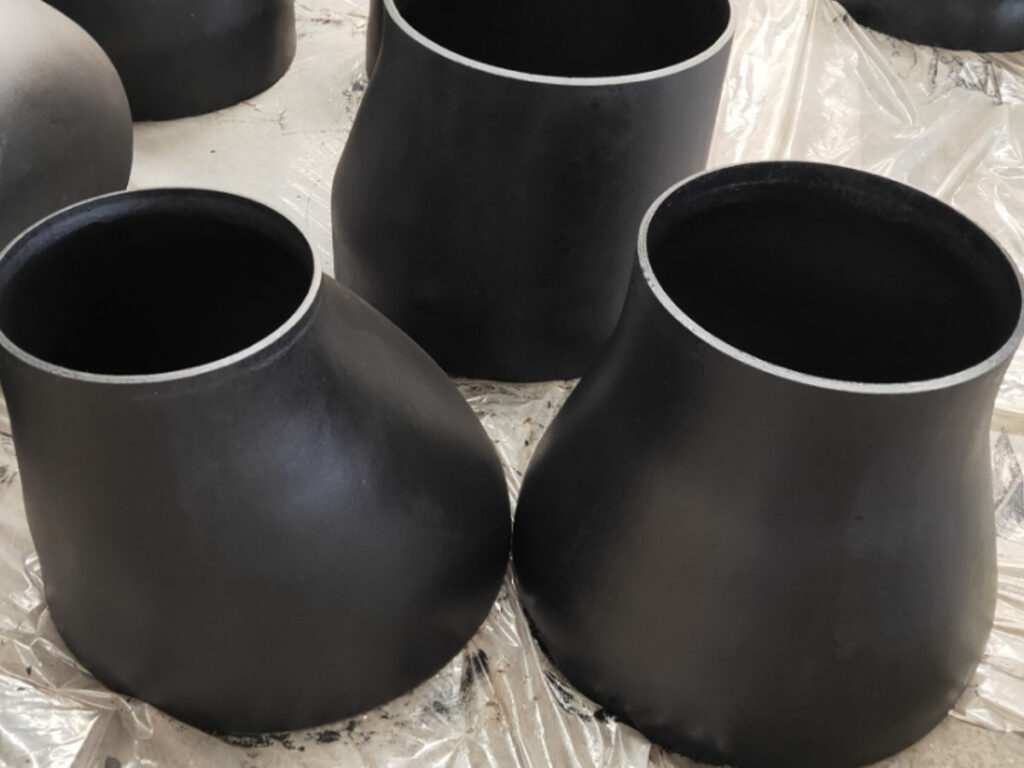
Concentric reducer VS eccentric reducer: specification differences
| Specification Differences | Concentric Reducer | Eccentric Reducer |
|---|---|---|
| Shape | Symmetrical shape | Asymmetrical shape |
| Centerline Offset | No offset, centerlines align | Offset centerlines |
| Reduction Ratio | Reduction in diameter is uniform | Reduction in diameter is not uniform |
| Design Standard | ASME B16.9 (ANSI) or EN 10253-2 (European) | ASME B16.9 (ANSI) or EN 10253-2 (European) |
| Available Sizes | Commonly available in a wide range of sizes | Available in various sizes, but often more limited compared to concentric reducers |
| Alignment during Installation | Easier to align during installation | Requires careful alignment to prevent issues due to the offset |
| Fluid Flow Characteristics | Provides a smooth transition for fluid flow, minimizing turbulence | Introduces turbulence due to the offset configuration |
| Common Applications | General applications where a gradual size change is acceptable | Used in applications where avoiding air or gas pocket accumulation is crucial |
| Preferred in | Most standard piping systems | Systems where prevention of air or gas pockets is a priority |
| Pressure Rating | Typically has a higher pressure rating | May have a slightly lower pressure rating compared to concentric reducers |
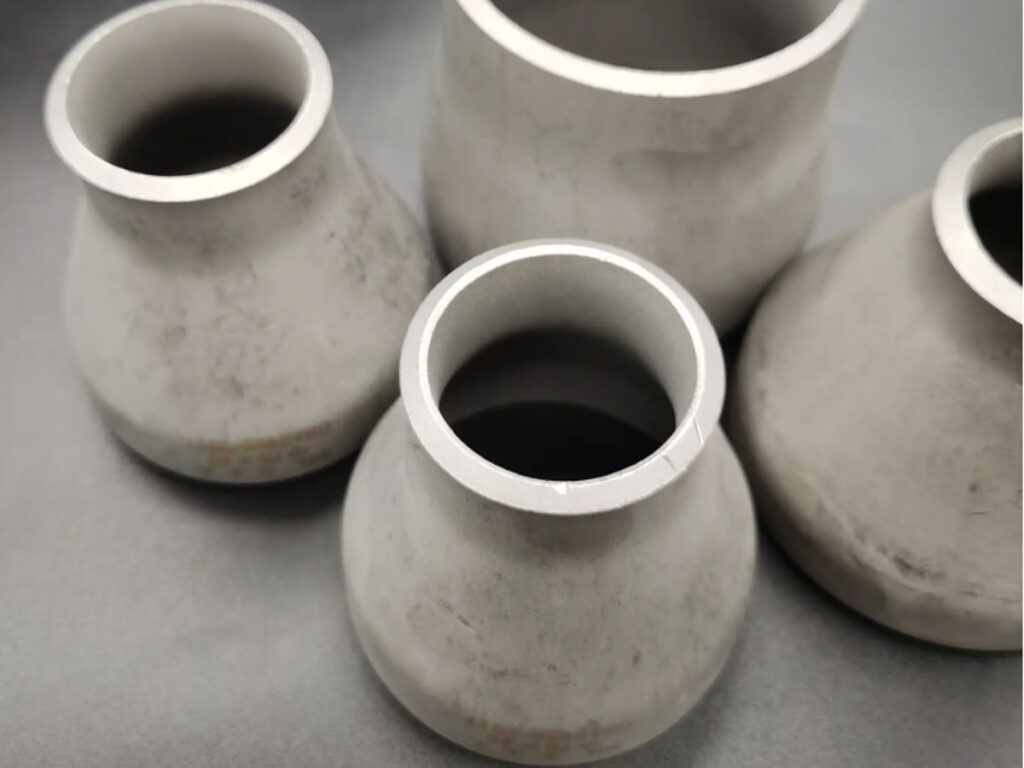
Concentric reducer VS eccentric reducer: differences in usage scenarios
| Usage Scenarios | Concentric Reducer | Eccentric Reducer |
|---|---|---|
| Fluid Flow Considerations | – Suitable for applications where maintaining a consistent fluid velocity is critical. | – Preferred when preventing air or gas pocket accumulation is important. |
| Turbulence in Flow | – Minimizes turbulence due to its symmetrical design. | – Introduces turbulence because of the offset configuration. |
| Pump Suction Nozzles | – Commonly used in pump suction nozzle applications. | – Preferred in systems where avoiding air or gas pocket accumulation is crucial, such as pump suction lines. |
| Pipe Rack Design | – Often used in pipe rack design to maintain a uniform elevation. | – Useful in systems with varying pipe elevations where a gradual slope is needed. |
| Slurry Lines | – Suitable for handling slurry lines with consistent fluid flow requirements. | – Used in slurry lines where preventing settling of solids is important. |
| Air or Gas Pocket Avoidance | – May not be ideal for systems where the accumulation of air or gas pockets is a concern. | – Preferred in systems where the design aims to avoid the accumulation of air or gas pockets. |
| Water Treatment Facilities | – Commonly found in water treatment facilities for maintaining flow consistency. | – Used in water treatment applications where preventing air pockets is essential. |
| Pipe Connection Alignment | – Easier to align during installation due to its symmetrical design. | – Requires careful alignment to avoid issues due to the offset configuration. |
| Industry Standards | – Adheres to standards such as ASME B16.9 (ANSI) or EN 10253-2 (European). | – Compliant with standards such as ASME B16.9 (ANSI) or EN 10253-2 (European). |
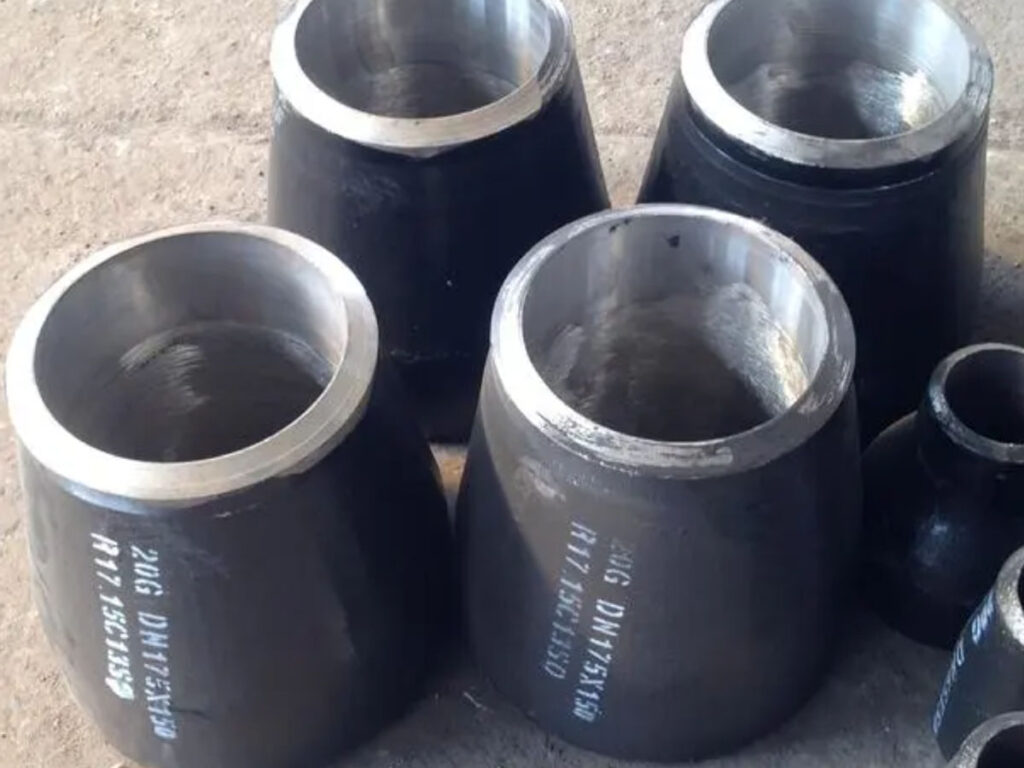
Concentric reducer VS eccentric reducer: differences in manufacturing process
| Manufacturing Process Differences | Concentric Reducer | Eccentric Reducer |
|---|---|---|
| Material Forming | – Typically formed from a single piece of material. | – Often formed from two separate pieces of material. |
| Production Method | – Cold forming or hot forming methods are common. | – Cold forming or hot forming methods are common. |
| Material Distribution | – Material thickness is distributed evenly. | – Material thickness is unevenly distributed due to the offset design. |
| Construction Simplicity | – Generally simpler to manufacture due to symmetry. | – May be slightly more complex to manufacture due to the need for alignment of offset pieces. |
| Welding Requirements | – May require less welding, as it is often a single-piece construction. | – Requires welding to join the two offset pieces. |
| Common Materials | – Stainless steel, carbon steel, alloy steel, etc. | – Stainless steel, carbon steel, alloy steel, etc. |
| Quality Control Challenges | – Generally easier to control dimensions and quality. | – Requires precise alignment during manufacturing, posing potential challenges. |
| End-Product Symmetry | – Symmetrical in shape, providing a balanced appearance. | – Asymmetrical in shape, may have an off-center appearance. |
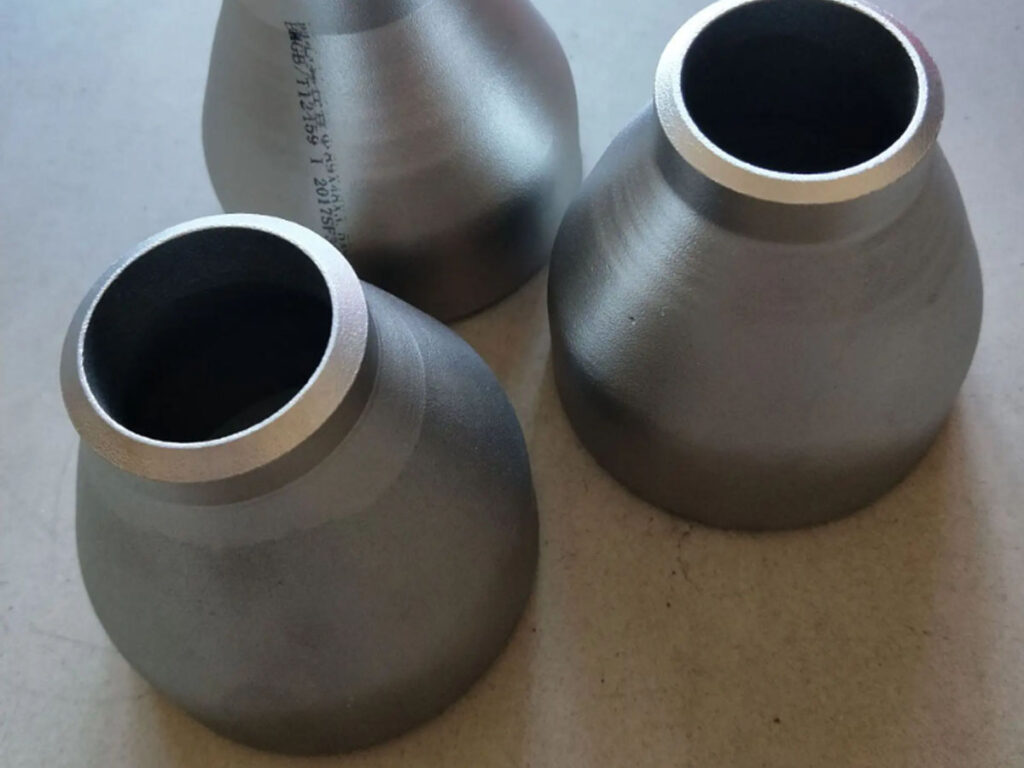
Concentric reducers VS eccentric reducers: standard differences
| Standard Differences | Concentric Reducer | Eccentric Reducer |
|---|---|---|
| ASME B16.9 (ANSI) | Commonly conforms to ASME B16.9 standards. | Commonly conforms to ASME B16.9 standards. |
| EN 10253-2 (European) | Complies with EN 10253-2 standards. | Complies with EN 10253-2 standards. |
| Material Specifications | Follows material specifications such as ASTM. | Follows material specifications such as ASTM. |
| Manufacturing Tolerance | Specifies tolerances for concentric design. | Specifies tolerances for eccentric design. |
| Dimensional Standards | Conforms to dimensional standards for concentric reducers. | Conforms to dimensional standards for eccentric reducers. |
| Testing and Inspection | Subject to standard testing and inspection procedures outlined in applicable standards. | Subject to standard testing and inspection procedures outlined in applicable standards. |
| Documentation Requirements | Requires documentation per standard requirements for concentric reducers. | Requires documentation per standard requirements for eccentric reducers. |
| Certification | Must meet certification requirements specified by the relevant standards. | Must meet certification requirements specified by the relevant standards. |
| Global Applicability | ASME standards are widely used in North America and many other regions. | EN standards are commonly used in European countries and may have global acceptance. |