The most comprehensive introduction to stainless steel: standards, sizes and everything you need to know
Contents
- Introduction
- What is Stainless Steel?
- Classification of Stainless Steel
- Applications and Characteristics of Stainless Steel
- Processing of Stainless Steel
- Specifications of Stainless Steel
- Specific Gravity of Various Stainless Steel Materials
- Terms in the Stainless Steel Industry
- Calculation Formulas for Stainless Steel Pipes
- FAQ
- Summary
Introduction
Stainless steel is a very common material, widely used in industry and everyday life. This article focuses on some basic information about stainless steel in industry, hoping to provide some helpful information for beginners.
For more information on stainless steel, please follow us on YouTube and LinkedIn.
What is Stainless Steel?
Stainless steel is a general term for stainless steel and acid-resistant steel. Generally, steel that does not rust in weak corrosive media such as atmosphere and fresh water is called stainless steel, while steel that is resistant to corrosion in harsh corrosive media such as acid, alkali, salt, and seawater is called acid-resistant steel.

Classification of Stainless Steel
Stainless steel can be divided into several categories based on its microstructure:
Ferritic stainless steel
This contains 12% to 30% chromium. Its corrosion resistance, toughness, and weldability improve with increasing chromium content, and its resistance to chloride stress corrosion is superior to other types of stainless steel.
Austenitic stainless steel
This contains greater than 18% chromium, approximately 8% nickel, and small amounts of molybdenum, titanium, nitrogen, and other elements. It offers excellent overall performance and resistance to corrosion from a variety of media.
Austenitic-ferritic duplex stainless steel
This combines the advantages of both austenitic and ferritic stainless steels and exhibits superplasticity.
Martensitic stainless steel
This has high strength but poor plasticity and weldability.

Applications and Characteristics of Stainless Steel
| Series | ASTM | GB (China) | JIS (Japan) | Properties & Characteristics | Typical Applications |
| 200 | 201 | 1Cr17Mn6Ni5N | SUS201 | Acid/alkali resistant, high density, bubble-free polish | Decorative/industrial pipes, shallow-drawn products |
| 202 | 1Cr18Mn8Ni5N | SUS202 | Mn/N substitute for Ni, better mechanical properties than 304 | Decorative/industrial pipes | |
| 2205 | 00Cr22Ni5Mo3N | SUS2205 | Balanced Cr/Mo/N for strength & weldability | Oil/gas pipelines, chemical equipment, seawater heat exchangers | |
| 300 | 304 | 06Cr18Ni10 | SUS304 | Excellent corrosion/heat resistance (-196°C~800°C), non-magnetic | Food equipment, household items, boilers |
| 304J1 | – | SUS304J1 | Cu-added for superior formability | Thermos bottles, kitchen sinks, textile machinery | |
| 304L | 00Cr19Ni10 | SUS304L | Low-carbon version with superior intergranular corrosion resistance | Chemical/petrochemical equipment requiring welding | |
| 321 | 1Cr18Ni9Ti | SUS321 | Ti-stabilized for 430-900°C service | Medical devices, aerospace, boiler components | |
| 316 | 0Cr17Ni12Mo2 | SUS316 | Mo-enhanced for extreme corrosion resistance | Marine equipment, chemical processing | |
| 316L | 00Cr17Ni14Mo2 | SUS316L | Low-carbon version with better intergranular resistance | Pharmaceutical equipment, coastal structures | |
| 309S | 0Cr23Ni13Mo2 | SUS309S | High-temperature alloy (up to 1000°C) | Heat treatment furnaces, exhaust systems | |
| 310S | 0Cr25Ni20Si2 | SUS310S | Superior creep strength at high temps | Industrial furnaces, thermal oxidizers | |
| 400 | 409L | 00Cr12Ti | SUS409L | Ti-stabilized ferritic (cheapest grade) | Automotive exhausts, welded containers |
| 410 | 1Cr13 | SUS410 | Martensitic with high strength but limited corrosion resistance | Cutlery, pump shafts, petroleum equipment | |
| 410S | 0Cr13 | SUS410S | – | – | |
| 420J1 | 2Cr13 | SUS420J1 | High hardness post-quenching | Knives, turbine blades | |
| 420J2 | 3Cr13 | SUS420J2 | Higher hardness than 420J1 | Surgical tools, valves | |
| 430 | 1Cr17 | SUS430 | Low thermal expansion ferritic steel | Appliances, kitchenware, architectural trims | |
| 444 | – | – | – | Water tank specialty steel |
Processing of Stainless Steel
| Surface Finish | Appearance | Manufacturing Process Description | Typical Applications |
| NO.1 | Silver-white, dull | Hot-rolled to specified thickness, then annealed and descaled to produce rough, matte surface | Applications where surface gloss is not required |
| NO.2D | Silver-white | Cold-rolled, heat treated and pickled, sometimes given final light pass through dull rolls | General use materials, deep drawing applications where surface finish isn’t critical |
| NO.2B | More lustrous than 2D | NO.2D finish followed by final light cold-roll pass through polished rolls (most common finish) | General purpose materials, first step for polishing |
| BA | Mirror-like bright | No standard definition, typically bright annealed to produce highly reflective surface | Architectural applications, kitchenware |
| NO.3 | Coarse grind | NO.2D/2B material ground with 100-200 grit abrasive belts | Building materials, kitchen equipment |
| NO.4 | Intermediate grind | NO.2D/2B material ground with 150-180 grit abrasive belts to produce reflective “grain” pattern | Same as NO.3 but with more refined appearance |
Specifications of Stainless Steel
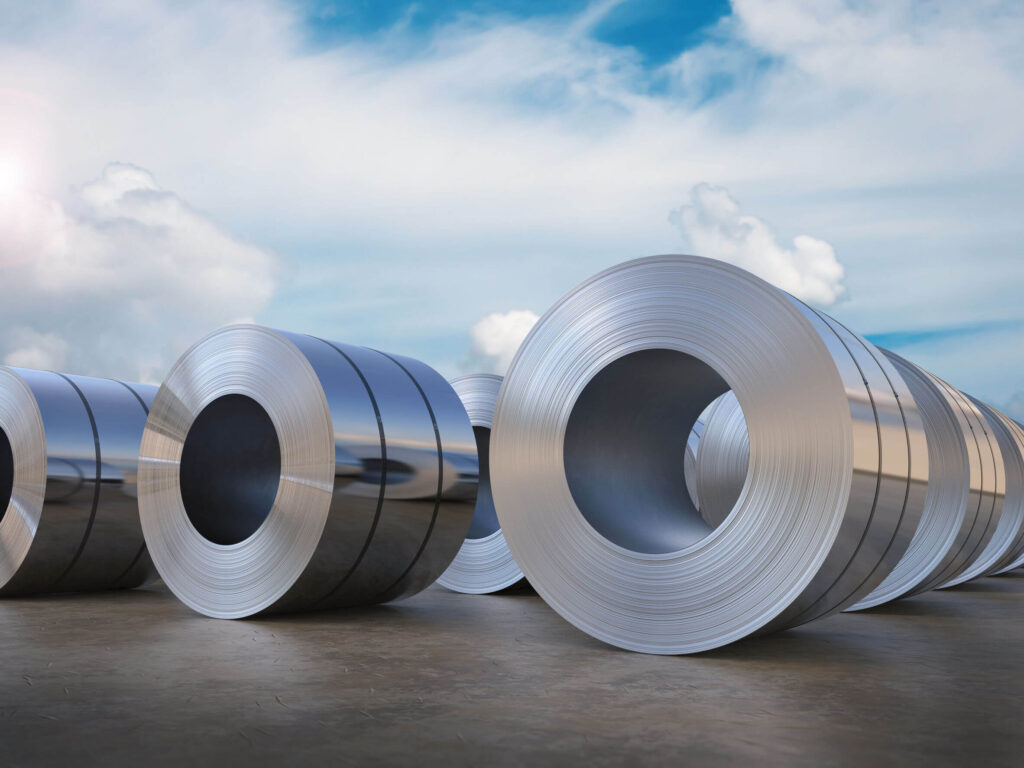
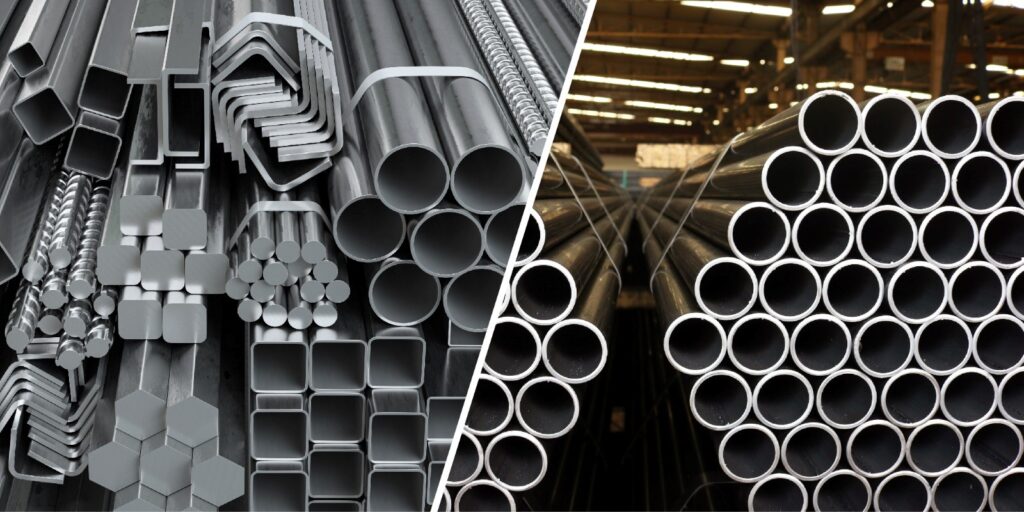
Stainless steel sheets include coils and flat coils.
- Coils are further divided into cold-rolled coils, hot-rolled coils, trimmed coils, and rough-edged coils.
- Cold-rolled coils generally have a thickness of 0.3-3mm, with 4-6mm thickness also available. Widths range from 1m, 1219m, and 1.5m, designated by “2B.”
- Hot-rolled coils generally have a thickness of 3-14mm, with 16mm coils also available. Widths range from 1250mm, 1500mm, 1800mm, and 2000mm, designated by “NO.1.”
- Coils with widths of 1.5m, 1.8m, and 2.0m are trimmed coils.
- Rough-edged coils generally have widths of 1520mm, 1530mm, 1550mm, 2200mm, and so on, which are wider than standard widths.
- The price difference between trimmed and rough-edged coils of the same model is generally around 300-500 yuan. 7. Coils can be cut to length according to customer requirements. After being flattened on a flattening machine, they are called flat sheets. Cold-rolled sheets typically come in sizes of 1m2m, 12192438, or 48 feet. Hot-rolled sheets typically come in sizes of 1.5m6m, 1.8m6m, or 2m6m. These sizes are called standard sheets or cut-to-length sheets.
Raw flat sheets, also known as single-sheet rolled sheets:
- The thickness of raw flat sheets generally ranges from 4mm to 80mm, although 100mm and 120mm are also available. These thicknesses can be custom-rolled.
- Widths range from 1.5m, 1.8m, and 2m, and lengths can exceed 6 meters.
- Characteristics: Raw flat sheets are bulky, expensive, difficult to pickle, and inconvenient to transport.

Specific Gravity of Various Stainless Steel Materials
- 304, 304L, 304J1, 321, 201, and 202 have a specific gravity of 7.93.
- 316, 316L, 309S, and 310S have a specific gravity of 7.98.
- 400 series have a specific gravity of 7.75.
Terms in the Stainless Steel Industry
What is overweight plate?
Due to technical limitations at the steel mill, the actual thickness of the rolled plate may be thicker than the standard thickness, or the length and width may be longer than the standard, resulting in a slightly heavier weight than the calculated weight.
What is rerolled plate?
Re-rolled steel is typically produced by small mills using scrap or re-rolled steel billets. This process uses outdated technology, resulting in poor surface finish, no quality assurance, and no mechanical performance guarantees.
Its nickel content also falls short of regulatory requirements. Drilling and thread forming are challenging, but its advantage lies in price.
What is rolled steel?
There’s a significant price difference between hot-rolled and cold-rolled coils, with hot-rolled coil being cheaper than cold-rolled coil.
Rolled steel offers both a price advantage and substantial profit margins, so many companies choose to purchase rolled steel.

Calculation Formulas for Stainless Steel Pipes
Stainless steel pipe: (outer diameter – wall thickness) × wall thickness × 0.02491 = kg/m
Stainless steel plate: Thickness × (width × length) × specific gravity = kg/cm²
Round steel: (diameter × diameter) 0.00623 = kg/m
Coil price: Flat plate price × theoretical thickness / actual thickness – flattening fee
Flat plate price: Coil price × actual thickness / theoretical thickness + flattening fee

FAQ
Is SUS the code for stainless steel in the Japanese JIS standard?
Japanese steel grades imported from the United States have the prefix “SUS” before the three digits. However, unlike ASTM, Japanese-developed steel grades have the suffix “J” to indicate Japan, such as “SUS 316J1,” as opposed to “SUS 316.”
How hard can SUS316 stainless steel be?
304 has inferior wear resistance and heat resistance, and its magnetic properties are indistinguishable. It may exhibit weak magnetic properties after processing, but this can be eliminated later using advanced technology.
The two most commonly used stainless steels are 304 and 316.
There are several methods for coloring stainless steel
(1) Chemical oxidation coloring method;
(2) Electrochemical oxidation coloring method;
(3) Ion deposition oxide coloring method;
(4) High-temperature oxidation coloring method;
(5) Gas phase decomposition coloring method.

Summary
Through this article, we’ve learned about the classification, uses, processing, and specifications of stainless steel. We believe you now have a clearer understanding of stainless steel.
As China’s largest stainless steel pipe manufacturer, Metleader offers a comprehensive product range, including stainless steel pipes and fittings.
All products undergo rigorous quality testing and are certified by third-party quality organizations to protect our customers’ rights.
We welcome customers to visit our factory in China.