Detailed Explanation of Irregular Flanges: Materials, Applications, and Characteristics
Table of Contents
- Preface
- What are Irregular Flanges?
- Materials of Irregular Flanges
- Characteristics of Irregular Flanges
- Classification of Irregular Flanges
- Applications of Irregular Flanges
- FAQ
- Why Choose Metleader?
Preface
Flanges are among the most common components in industrial piping and mechanical equipment installation. While most flanges are round and come in various types, today we’ll be discussing non-standard flanges.
Non-standard flanges play a crucial role when standard flanges fail to meet installation requirements.
Understanding the basics of non-standard flanges helps us better understand what they are, their characteristics, classifications, advantages, and disadvantages, enabling us to make better choices.
For more information on flanges and steel pipes, please visit our YouTube channel and LinkedIn.

What are Irregular Flanges?
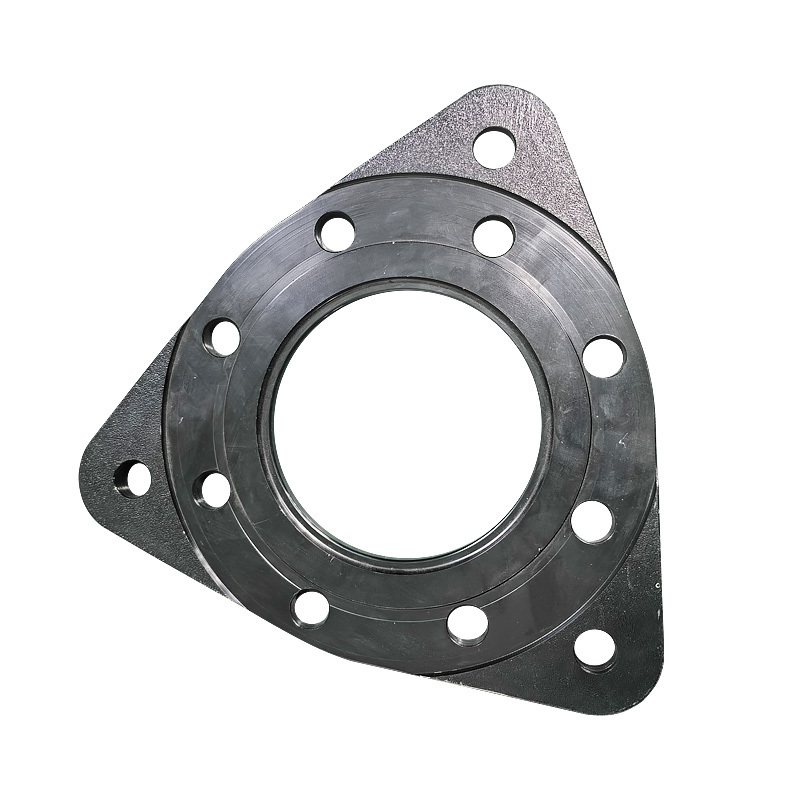
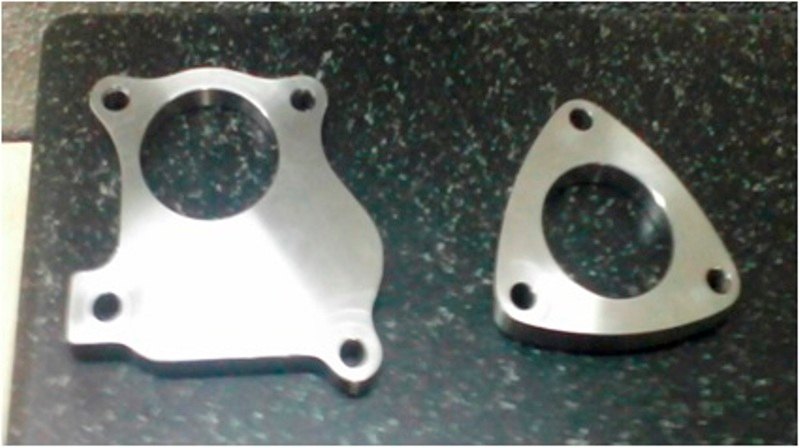
Special-shaped flanges are a type of flange with a special shape in piping connection systems. Unlike common round flanges, they have a non-standard geometric shape.
Materials of Irregular Flanges
Similar to conventional flanges, the common materials for non-standard flanges are carbon steel, stainless steel, and alloy steel. Among these, carbon steel and stainless steel are the most widely used.
Characteristics of Irregular Flanges
Special-shaped flanges play a very important role in industrial pipeline installation, and they have the following characteristics:
Customization and Adaptability
This is the core characteristic of non-standard flanges. They are “tailor-made” to solve specific problems and address connection challenges under special working conditions.
Flexibility in Structural Design
The design of non-standard flanges is not constrained by standard forms. They can be flexibly structurally reinforced according to load requirements and fluid characteristics, which is difficult to achieve with standard flanges.
Diverse Material Selection
The material selection for non-standard flanges depends entirely on their working environment. Common materials include carbon steel, stainless steel, alloy steel, and some non-metallic materials such as PVC.
Ensuring Reliable Sealing
Although their shape is special, non-standard flanges still prioritize sealing performance, forming effective seals even in complex shapes to prevent media leakage.
Complexity in Manufacturing Process
Non-standard flanges typically cannot be produced through simple mass production lines.
The manufacturing process often involves multiple processes such as custom molds, profile cutting, precision casting, and CNC machine tool processing, placing high demands on the manufacturer’s technical capabilities and processing equipment.
Classification of Irregular Flanges
Depending on their shape and application, non-standard flanges can be categorized as follows:
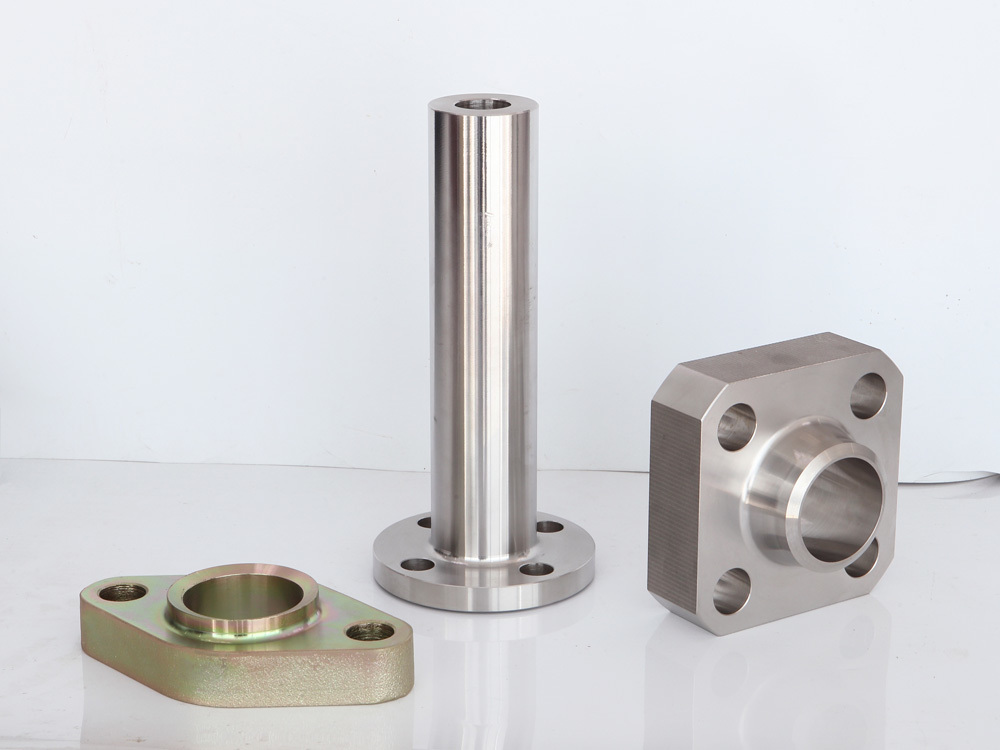
- Square Flanges: These flanges are square or rectangular and are commonly used for connecting square containers or pipes. In space-constrained environments, square flanges are better suited to the installation conditions.
- Oval Flanges: Oval flanges are typically used in applications requiring weight reduction or meeting specific hydrodynamic requirements. This shape effectively reduces material usage while maintaining sufficient structural strength.
- Polygonal Flanges: Polygonal flanges include various shapes such as triangles, pentagons, and hexagons, suitable for connecting special equipment or unconventional piping.
- Reducing Flanges: Although not strictly considered “non-standard” in shape, reducing flanges connect pipes of different diameters and are functionally a type of special flange.
Applications of Irregular Flanges
Petrochemical industry
Power industry
Shipbuilding industry
Environmental engineering
Food and pharmaceutical industry
FAQ
Q: How to address the issue of uneven stress distribution in irregular-shaped flanges?
A: To solve this problem, computer-aided engineering software is used during the design phase for stress analysis and simulation, simulating the stress conditions under working conditions.
Based on the simulation results, engineers will optimize areas with excessive stress by increasing thickness, setting smooth transition zones, or adding reinforcing structures, thereby ensuring structural strength and operational safety.
Q: Irregular-shaped flanges are typically more expensive; how to control the cost?
A: Cost control mainly focuses on both design and production. In design, the structure is simplified as much as possible while meeting functional requirements, avoiding unnecessary complex shapes.
In production, for small-batch needs, flexible manufacturing methods such as CNC cutting and welding can be used; for larger quantities, special molds can be developed, and casting or forging blanks can be used followed by precision machining, thereby reducing the cost per unit.
Q: How to ensure the machining quality of the sealing surface of irregular-shaped flanges?
A: Modern manufacturing generally uses CNC vertical lathes, CNC milling machines, or machining centers to perform precision machining of such complex curved surfaces.
By controlling the tool path through digital programming, sealing surfaces that meet design requirements can be machined with high precision and repeatability, ensuring their flatness, surface roughness, and relative positional accuracy with other mounting holes.
Why Choose Metleader?
Metleader manufactures a wide variety of flanges in various specifications and standards, including ASTM, DIN, JIS, and GB. Customization is available to meet the technical requirements of most industrial projects.
For flange and pipe fitting procurement, Metleader is an excellent supplier.