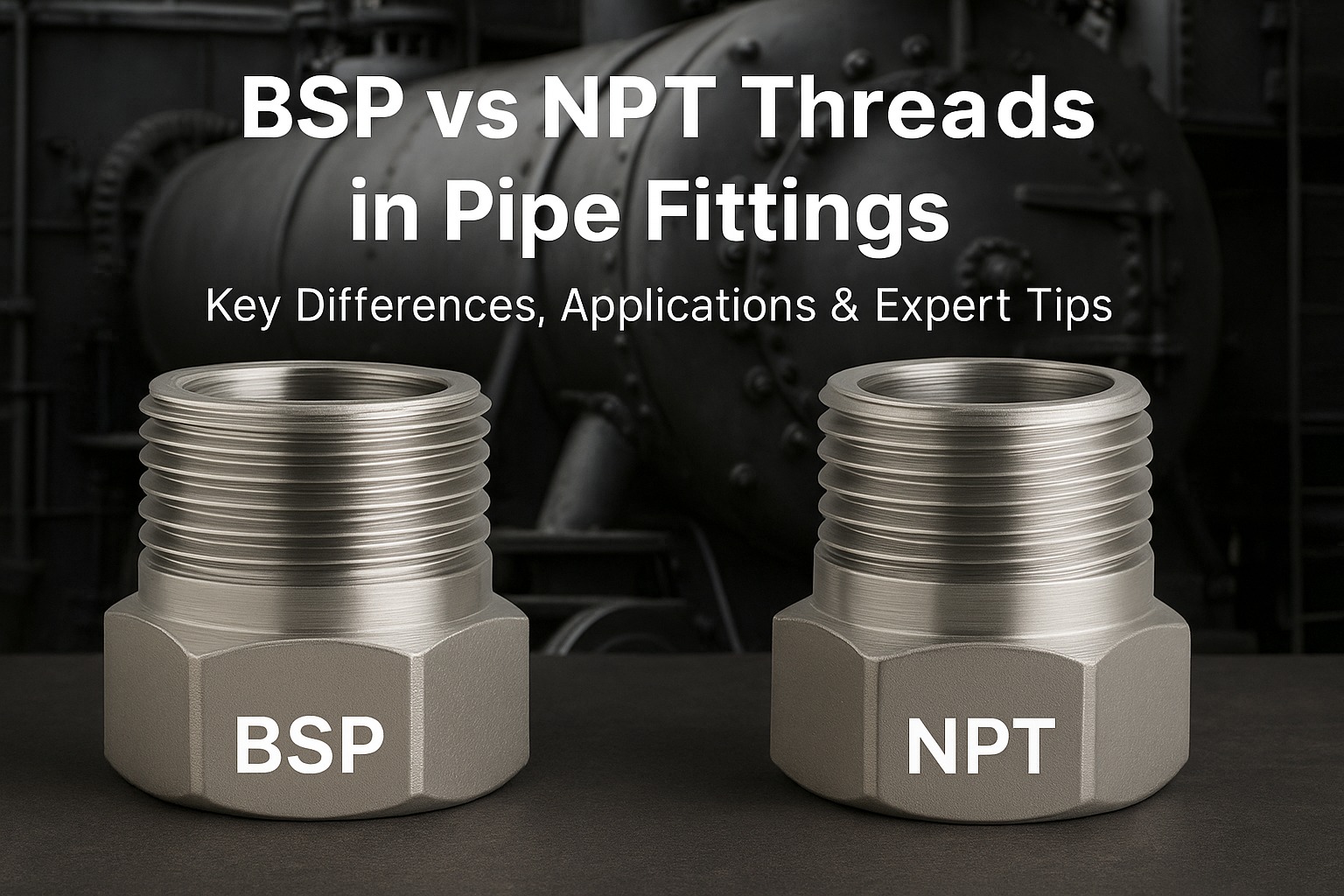
Differences between NPT and BSPT, Analysis of Thread Standards
Table of contents
- Preface
- What is NPT?
- What is BSPT?
- Thread Classification
- Thread Characteristics
- Thread Applications
- Thread Standards and Specifications
- Thread Installation Points
- Thread Specifications and Dimensions
- Why Choose Metleader?
Preface
Understanding thread classifications, applications, sizes, and standards can help us better select suitable pipe fittings. Today, this article will help you make a better choice.
In industrial applications, thread standards are crucial to project safety. Understanding these standards is essential for ensuring efficient project operation.
If you would like to learn more about Metleader, you can follow us on YouTube and LinkedIn.
What is NPT?
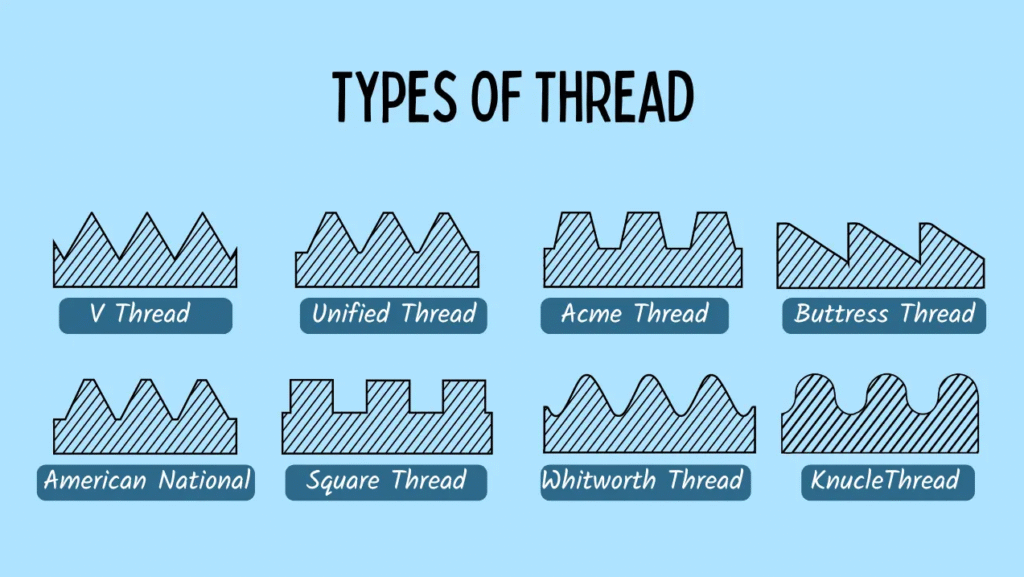
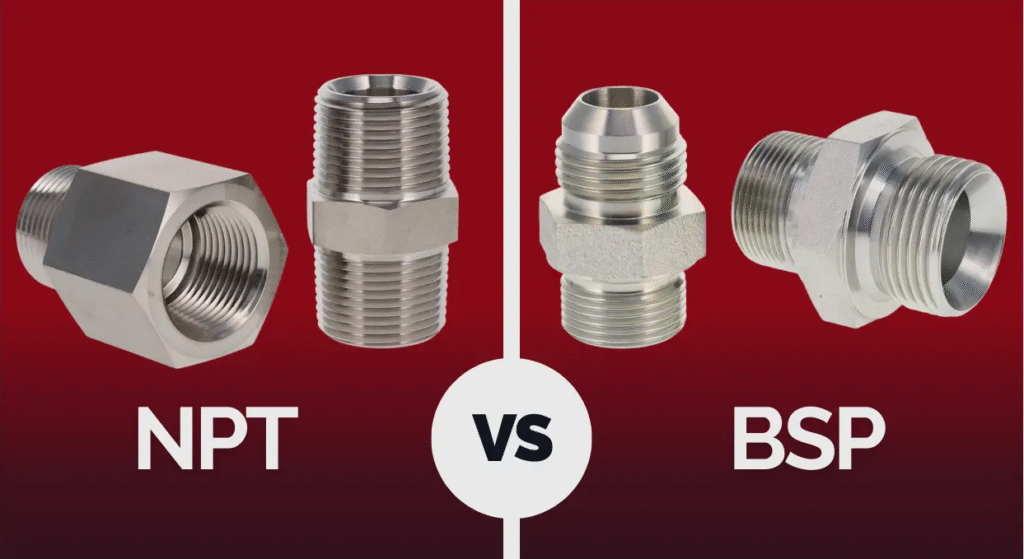
NPT thread is a 60-degree tapered pipe thread widely used in North America. It is designed to achieve excellent sealing performance and high-strength connections.
What is BSPT?
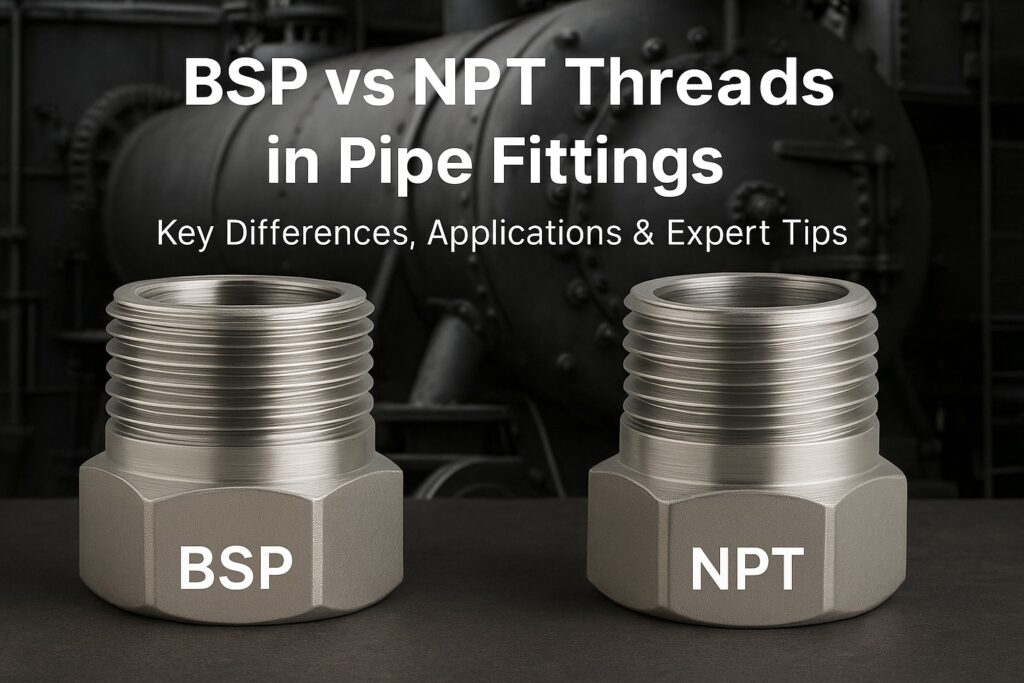
BSPT is an internationally adopted tapered thread used for connecting and sealing pipes, primarily in Europe and the UK.
Thread Classification
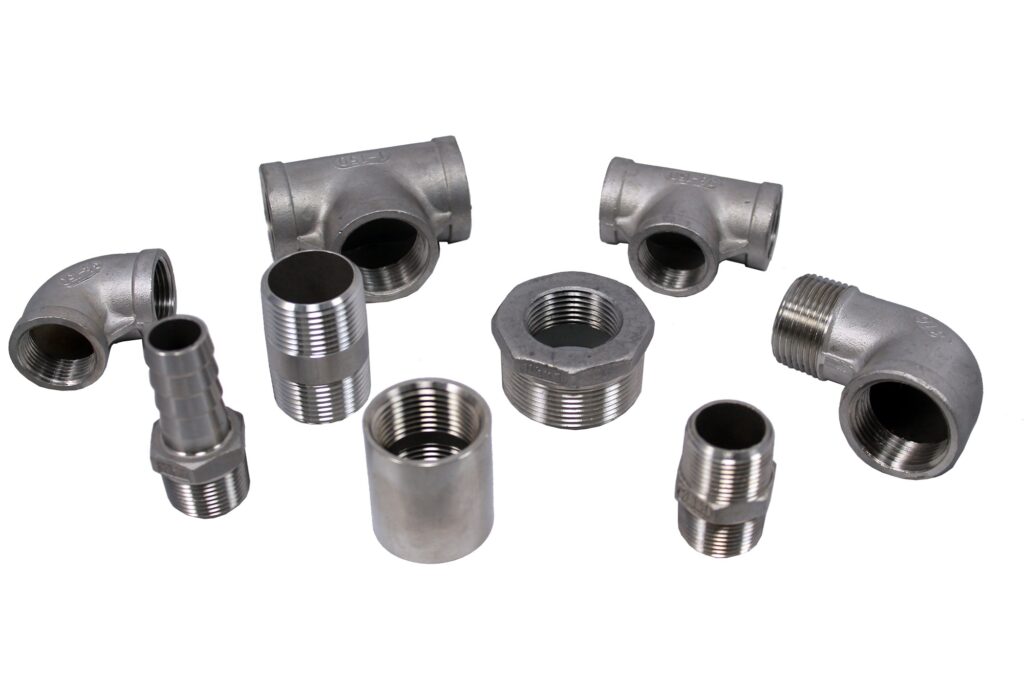
There are many types of threads; currently, as many as 11 types are commonly used internationally. These are:
- International Metric Standard Threads
- American Standard Threads
- Unified Standard Threads
- V-Threads
- Whistle Threads
- Round Threads
- Pipe Threads
- Square Threads
- Trapezoidal Threads
- Sawtooth Threads
- Ball Threads
Thread Characteristics
NPT Threads
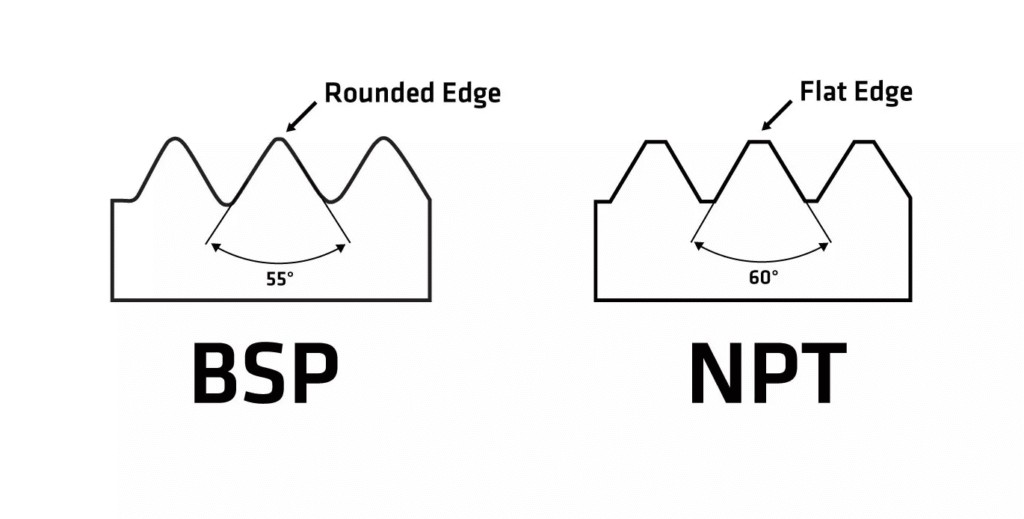
Feature a high thread height and a large pitch, resulting in a longer lead. This design allows NPT threads to provide reliable sealing performance and reduce the possibility of leakage, making them particularly suitable for applications requiring metal-to-metal seals.
BSPT Threads
Feature a 55° thread angle and a 1:16 taper. This tapered thread design is also used for sealing and locking connections, but its thread angle and taper differ from NPT threads.
Thread Applications
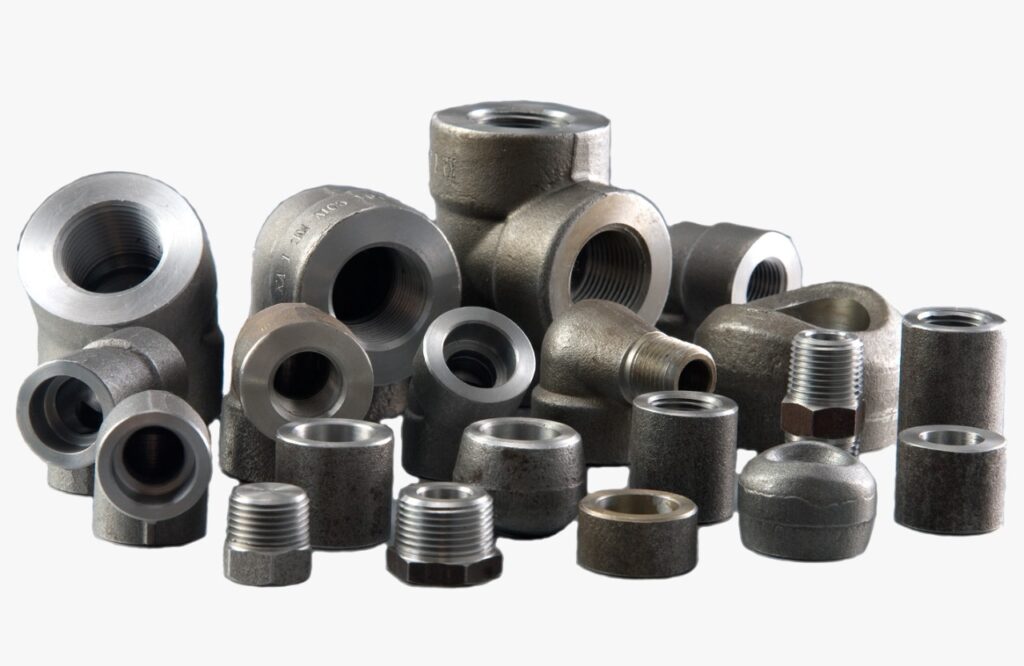
Due to their excellent sealing performance and standardized design, NPT threads are widely used in piping systems, especially in applications requiring high operating pressure and guaranteed sealing.
They are suitable for various pipe materials, such as steel, cast iron, and copper, and are compatible with a wide range of fluid media.
BSP threads, on the other hand, are widely used in industrial piping, aerospace, shipbuilding, chemical equipment, and automotive manufacturing.
In industrial piping, BSP threads are commonly used to connect fittings, valves, and piping systems.

Thread Standards and Specifications
NPT threads are internal thread fittings defined by the American National Standard and comply with the American National Pipe Thread Standard;
BSP threads are British Standard tapered pipe threads, a standard defined and managed by BSI, and have wide international recognition.

Thread Installation Points
NPT threads are typically made of metal, offering excellent corrosion resistance and strength. Installation is simple, requiring no special tools; a wrench or pipe wrench is usually sufficient for installation and removal.
NPT threaded fittings also boast high pressure resistance and a wide range of applications. However, regular inspection and maintenance are necessary to ensure their sealing performance and service life.
BSP threads also offer easy installation and good sealing, but the appropriate selection may depend on the specific piping system and media characteristics required for each application.
Thread Specifications and Dimensions
55° Taper Pipe Thread (BSPT – R Series) Dimensions
| Thread Designation | Nominal Size (inch) | Major Diameter, d=D (mm) | Pitch, p (mm) | Threads per Inch (tpi) | Pitch Diameter, d2=D2 (mm) | Minor Diameter (External), d3 (mm) | Thread Height, H1 (mm) | Radius, r (mm) | Tap Drill Size (mm) |
| R 1/16 | 1/16″ | 7.723 | 0.907 | 28 | 7.142 | 6.561 | 0.581 | 0.125 | 6.4 |
| R 1/8 | 1/8″ | 9.728 | 0.907 | 28 | 9.147 | 8.566 | 0.581 | 0.125 | 8.4 |
| R 1/4 | 1/4″ | 13.157 | 1.337 | 19 | 12.301 | 11.445 | 0.856 | 0.184 | 11.2 |
| R 3/8 | 3/8″ | 16.662 | 1.337 | 19 | 15.806 | 14.950 | 0.856 | 0.184 | 14.75 |
| R 1/2 | 1/2″ | 20.955 | 1.814 | 14 | 19.793 | 18.631 | 1.162 | 0.249 | 18.25 |
| R 3/4 | 3/4″ | 26.441 | 1.814 | 14 | 25.279 | 24.117 | 1.162 | 0.249 | 23.75 |
| R 1 | 1″ | 33.249 | 2.309 | 11 | 31.770 | 30.291 | 1.479 | 0.317 | 30.0 |
| R 1 1/4 | 1 1/4″ | 41.910 | 2.309 | 11 | 40.431 | 38.952 | 1.479 | 0.317 | 38.5 |
| R 1 1/2 | 1 1/2″ | 47.803 | 2.309 | 11 | 46.324 | 44.845 | 1.479 | 0.317 | 44.5 |
| R 2 | 2″ | 59.614 | 2.309 | 11 | 58.135 | 56.656 | 1.479 | 0.317 | 56.0 |
| R 2 1/2 | 2 1/2″ | 75.184 | 2.309 | 11 | 73.705 | 72.226 | 1.479 | 0.317 | 71.0 |
| R 3 | 3″ | 87.884 | 2.309 | 11 | 86.405 | 84.926 | 1.479 | 0.317 | 85.5 |
| R 4 | 4″ | 113.030 | 2.309 | 11 | 111.551 | 110.072 | 1.479 | 0.317 | 110.5 |
| R 5 | 5″ | 138.430 | 2.309 | 11 | 136.951 | 135.472 | 1.479 | 0.317 | 136.0 |
| R 6 | 6″ | 163.830 | 2.309 | 11 | 162.351 | 160.872 | 1.479 | 0.317 | 161.5 |

Why Choose Metleader?
As the article shows, the precision of the thread is crucial to project safety.
As one of China’s largest pipe fitting manufacturers, Metleader possesses extensive manufacturing experience and mature processes, ensuring that all products meet customer requirements.
Metleader has its own factory and rigorous quality inspection processes, ensuring that every product conforms to standards.
If you want to choose a reliable supplier, strength and experience are both indispensable; then Metleader is the best choice.