About threaded flanges: What you may have missed
Table of contents
- What is a threaded flange
- Structural features of a threaded flange
- Technical advantages of a threaded flange
- Applicable limitations of a threaded flange
- Application scenarios of a threaded flange
- Technical parameters of a threaded flange
- Summary
What is a threaded flange
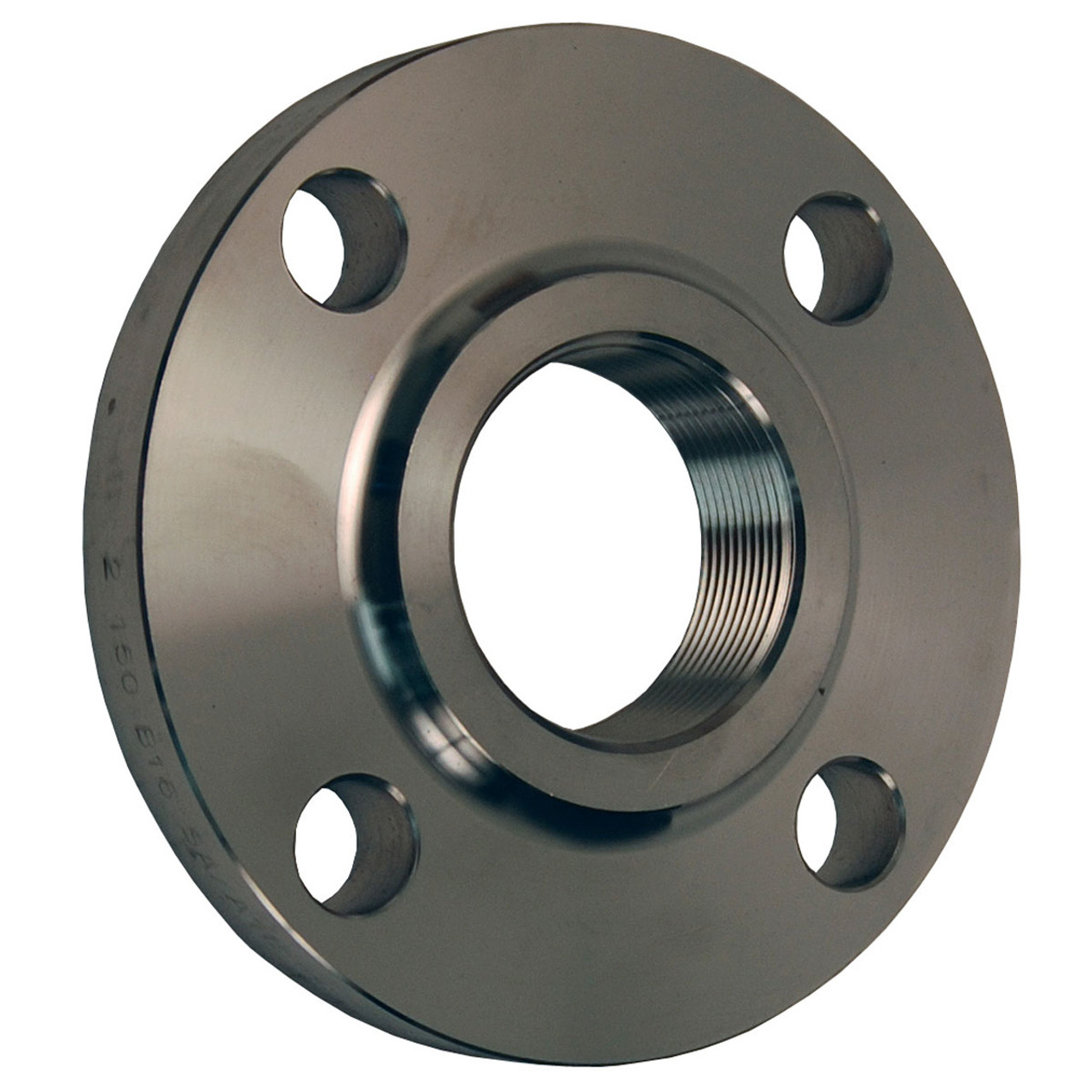
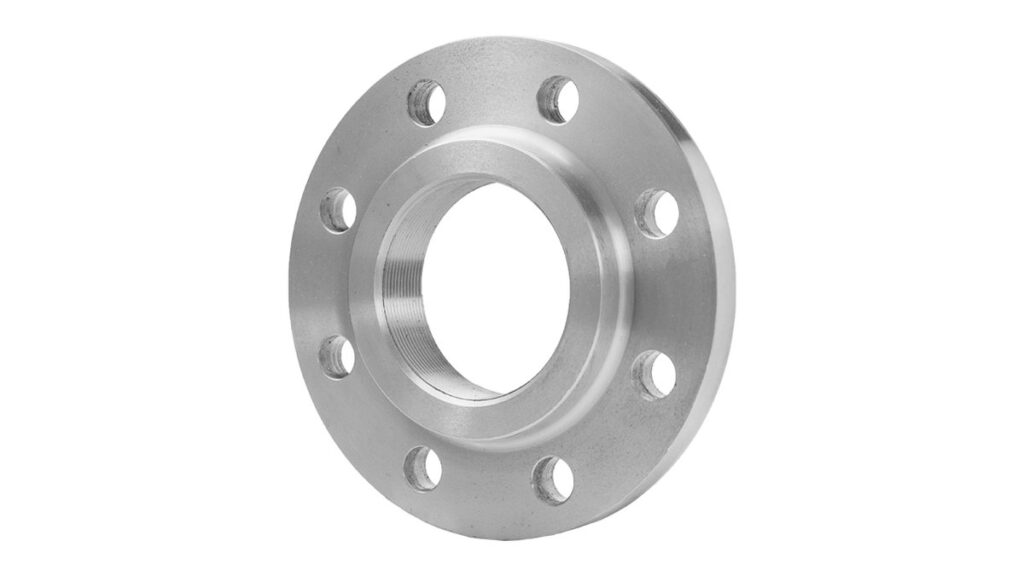
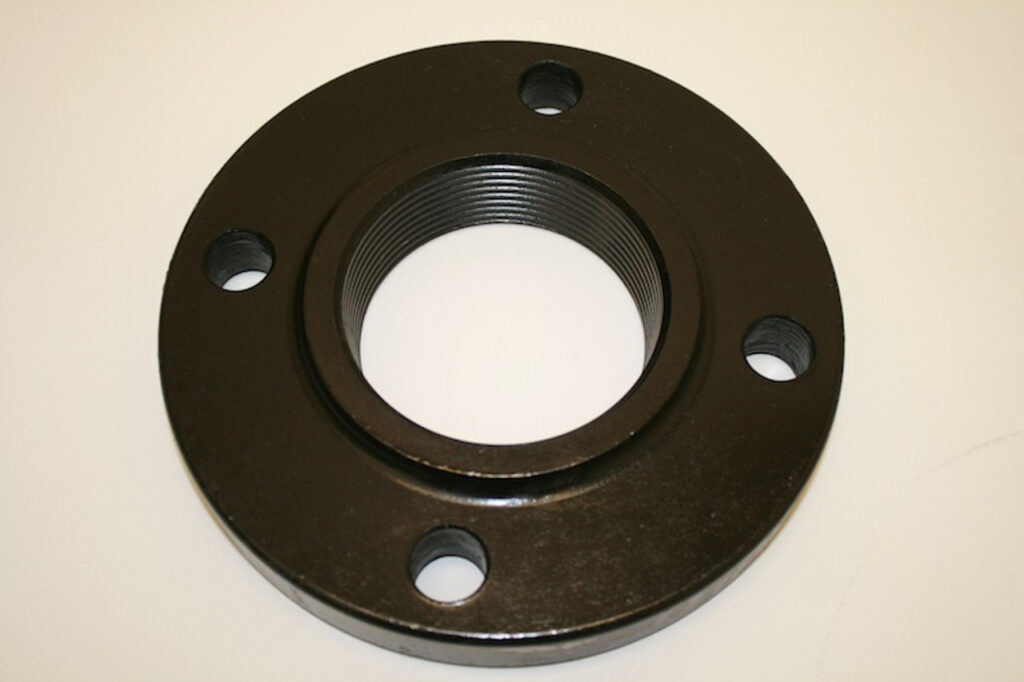
The threaded flange consists of a flange plate and a threaded hole. The center of the flange plate is a through hole, the edge has bolt holes evenly distributed, and the inner wall is processed with threads.
Structural features of a threaded flange
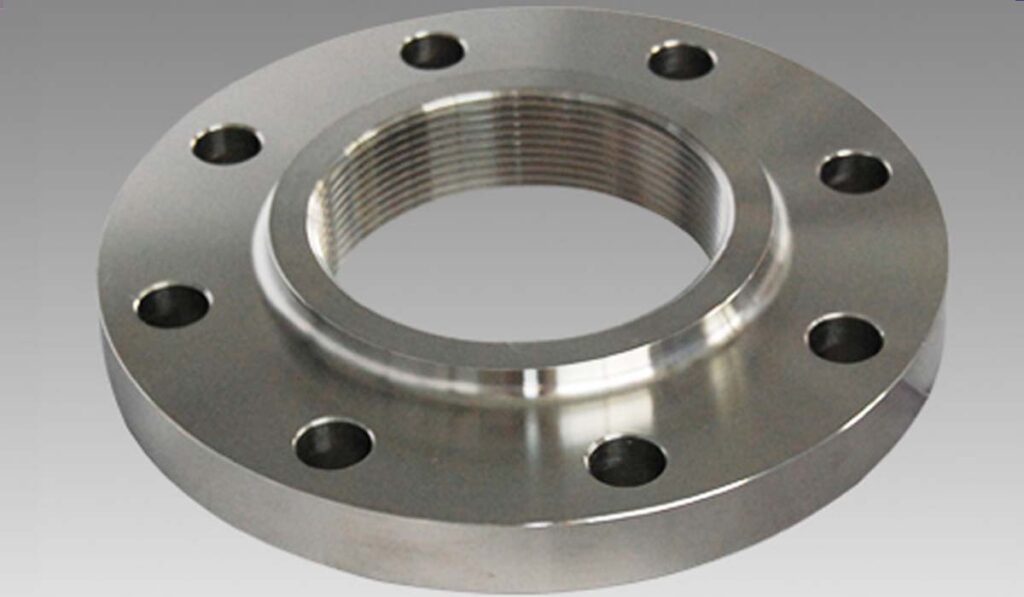
By precisely machining the inner hole of the flange into pipe threads, it can be directly screwed into the pipe with external threads to form a reliable sealing structure.
This structure does not require welding operations, and the flange neck adopts a tapered design to enhance the thread engagement strength. The thread specifications can be adapted to international mainstream standards according to needs.
Technical advantages of a threaded flange
Process characteristics: Completely eliminate the heat affected zone of welding, avoid intergranular corrosion and strength reduction of alloy steel materials caused by welding.
Installation efficiency: Single-piece assembly time is 60% shorter than that of welded flanges, especially suitable for high-altitude or underground pipeline construction in confined spaces.
Stress control: The additional torque generated when the flange is deformed is only 1/5 of that of the welded flange, reducing the risk of stress concentration in the pipeline system.
Applicable limitations of a threaded flange
Temperature sensitivity: When the medium temperature exceeds 260℃, the thread will expand due to heat, causing the sealing pressure to drop; below -45℃, the metal will shrink, causing leakage in the thread gap.
Size limitation: When the nominal diameter exceeds DN500, the difficulty of controlling the thread processing accuracy increases significantly, and a special locking device is required to ensure the sealing reliability.

Application scenarios of a threaded flange
Chemical equipment: Suitable for the inlet and outlet connection of high-temperature alloy steel reactors such as chrome-molybdenum steel to avoid material embrittlement caused by welding.
Oil and gas transportation: As a safe connection solution in flammable and explosive medium pipelines, it eliminates safety hazards caused by welding sparks.
Medical equipment: Meets the aseptic installation requirements of 316L stainless steel clean pipeline systems, and threaded connections can be quickly disassembled and sterilized.
Technical parameters of a threaded flange
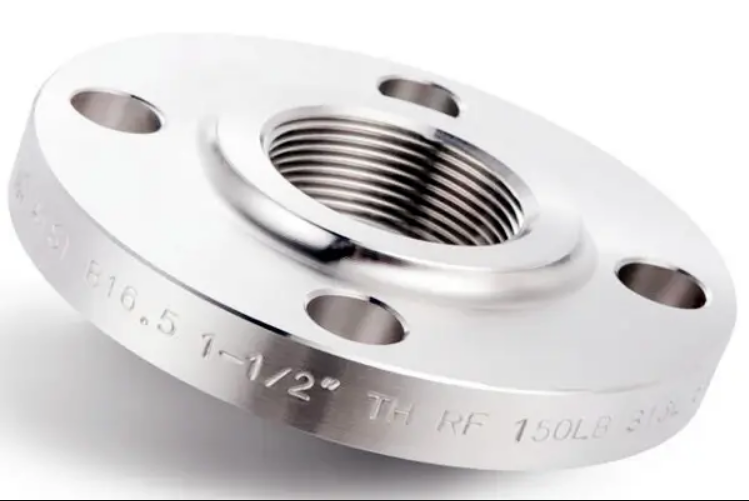
Pressure bearing: It can withstand a maximum pressure of PN40MPa at room temperature. As the temperature rises, the pressure must be reduced according to the standard.
Surface treatment: Pickling and passivation treatment makes the surface roughness ≤Ra1.6μm, improving the fit of the sealing gasket.
Thread accuracy: 6H/6g tolerance matching grade is adopted to ensure the thread contact area when screwing.
Summary
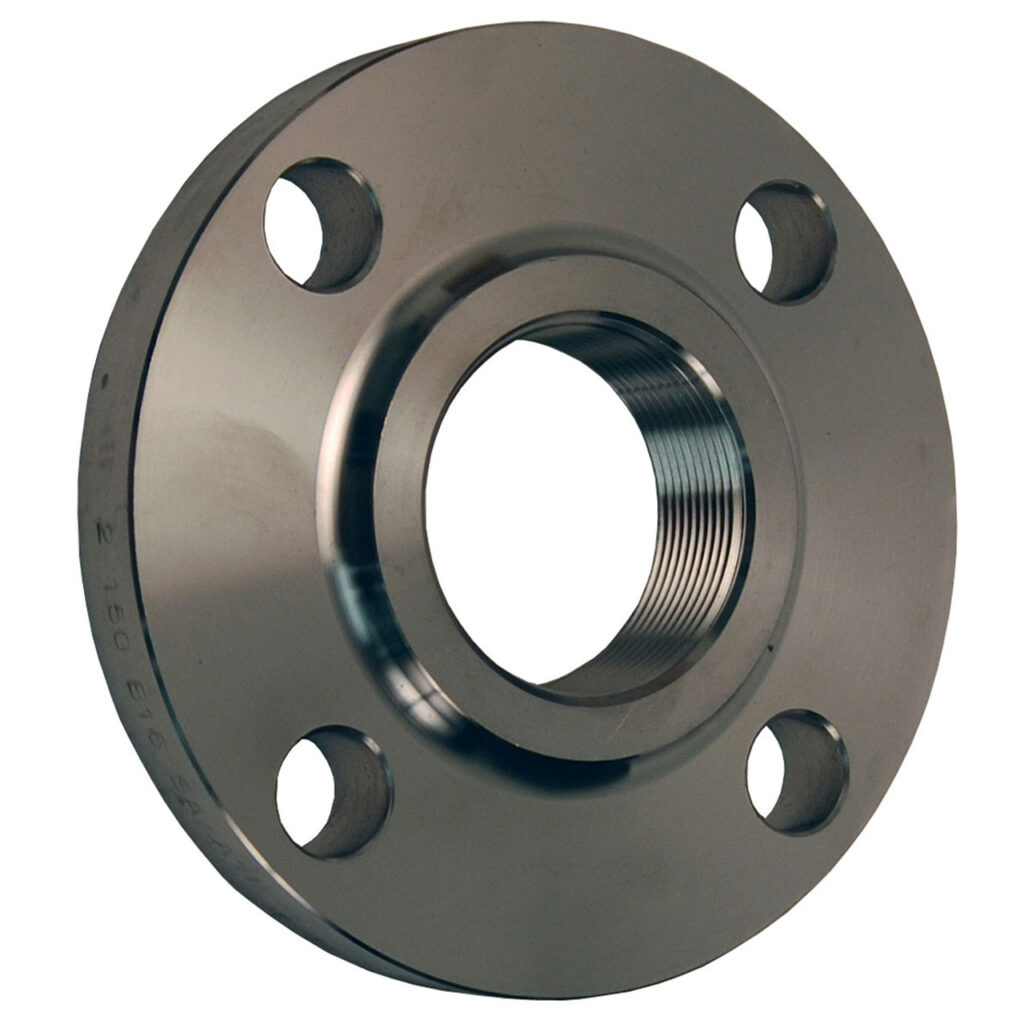
As an important pipe connector, threaded flanges are widely used in industrial production.
Most of the articles on the Internet introduce the basic knowledge of threaded flanges, but rarely cover its technical advantages, technical limitations and technical parameters.
Today’s article introduces these contents, which can make up for beginners’ understanding of threaded flanges.
We also hope to help customers better choose products that suit them.
To learn more about flange pipe fittings, you can subscribe to our youtube and LinkedIn.