Common problems in pipe flange connections
Question 1: The flange end face is not perpendicular to the pipe axis
After the flange is welded to the pipe, the flange end face is not perpendicular to the pipe axis.
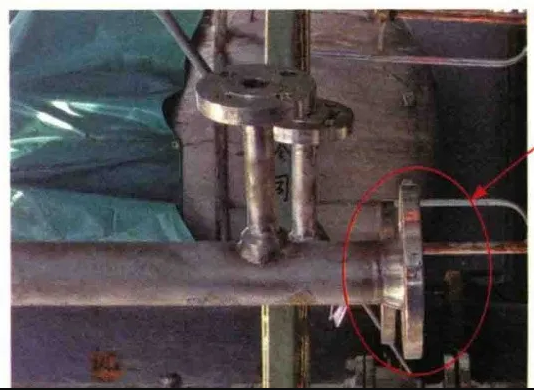
The flange end face should be perpendicular to the center line of the pipeline.
The deviation can be checked with a square and a steel ruler.
When the nominal diameter of the pipeline is less than or equal to 300mm, the allowable deviation is 1mm; when the nominal diameter of the pipeline is greater than 300mm, the allowable deviation is 2mm.
Harm
The appearance quality is affected; the pipeline is not straight after the two flanges are connected; the flange face connection is not tight, resulting in media leakage.
Question 2: Two flanges connecting misaligned
After the flanges are tightened, the bolt holes of the two flanges are misaligned, the outer edges of the flanges are misaligned, and the axes of the two flanges are not coaxial.

Flange connections should maintain the same axis, and the deviation of the bolt hole center should not exceed 5% of the hole diameter, and bolts should be able to pass through freely.
Harm
1) Bolt Misalignment
Misaligned bolt holes, requiring the use of smaller diameter bolts, result in low connection strength and are prone to leakage at the flange mating surface.
Severe misalignment can make it difficult to pass the bolts, requiring rework.
2) Flange Misalignment
Poor flange mating can lead to leakage.
Misalignment between the two flanges reduces the flow cross-section, increasing the resistance to medium flow and affecting flow rate.
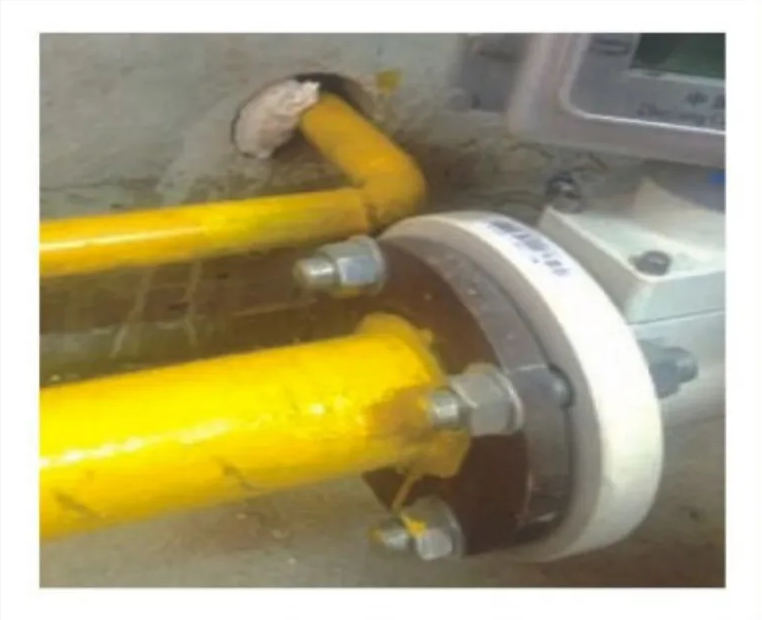
Question 3: Flange sealing surface damage
There are obvious signs of damage on the sealing surface of the weld neck flange.
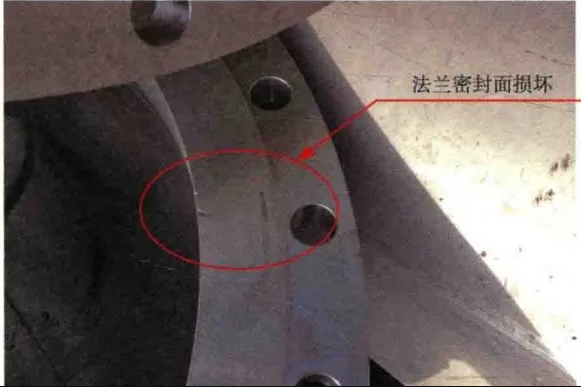
Before installation, flanges should undergo a visual inspection and meet the following requirements:
- The nominal pressure of the flange should meet the design requirements.
- The flange sealing surface should be smooth and clean, free from burrs and radial grooves. The flange threads should be intact and undamaged. Raised face flanges should fit naturally, and the height of the raised face should not be less than the depth of the groove.
- The threads of bolts and nuts should be intact, free from scratches, burrs, or other defects; bolts and nuts should fit well without looseness or jamming.
Harm
1) Excessive damage to the flange leads to its scrapping, increasing construction costs. For special flanges, it may also affect the construction period.
2) Reducing the effective sealing width of the flange decreases its sealing performance, resulting in flange leakage.
Question 4: Flange gasket installation eccentric
The gasket is not concentric with the flange; the gasket is noticeably sagging and not making sufficient contact with the flange sealing surface.
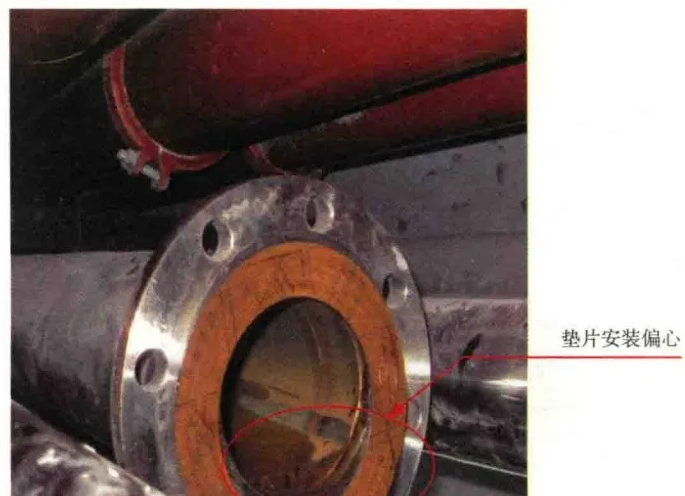
The size of the flange gasket should match the flange sealing surface. The gasket should be installed correctly. It is strictly forbidden to use two or more flange gaskets on one sealing surface.
Harm
1) It alters the cross-section of the medium passage, increasing local head loss in the pipeline, which will affect the medium’s velocity and flow rate;
2) It reduces the effective contact area between the gasket and the flange sealing surface, lowering the sealing performance and easily causing leakage at the flange interface.
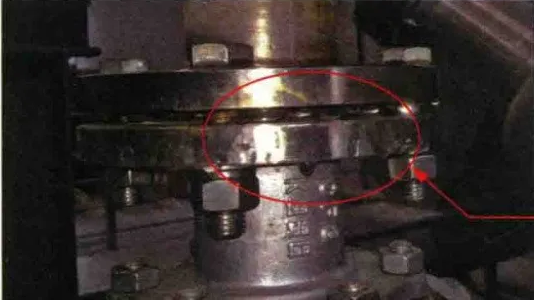
Question 5: Flange sealing surface leakage
Media leakage at the flange sealing surface during pipeline pressure testing or operation.
Harm
Flange seal leakage can cause leakage of conveyed materials, gases and other media. In minor cases, it can cause media loss and environmental pollution, and in severe cases, it can affect the normal operation of the system or even cause major fires or personal injury accidents.
Cause Analysis
1) Mechanical damage to the gasket and flange sealing surfaces, or use of old gaskets;
2) Incompatibility between the gasket sealing material and the medium properties, causing gasket corrosion;
3) Misalignment in gasket installation, not concentric or coaxial with the flange;
4) Flanges are not parallel or tilted, flange bolts are not tightened evenly;
5) In pipelines carrying high-temperature media, flanges, bolts, and gaskets may experience creep and stress relaxation, causing a decrease in the sealing pressure of the flange surface.
When both temperature and pressure fluctuate, the gasket will fatigue, leading to seal failure. In pipelines carrying low-temperature media, due to the different cooling rates of flanges and bolts, the gasket preload will decrease unevenly.
Combined with the shrinkage and reduced elasticity of the gasket at low temperatures, this accelerates leakage.
Question 6: Flange connection bolts do not meet requirements
The bolts used to fasten the flange are of mismatched specifications; the bolts are too long or too short, or they are below the nut.
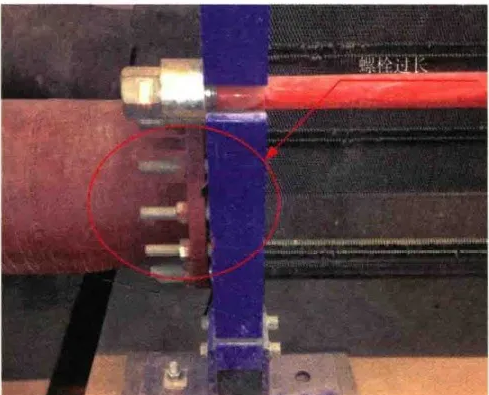
The bolt and the bolt hole diameter should match, and bolts of the same specification should be used. The installation direction should be consistent, and the bolts should be tightened symmetrically and evenly, with moderate tightening.
After tightening, the exposed length of the bolt should not exceed one thread pitch and should not be less than that of the nut.
Bolts of the same specification should be used, and the installation direction should be consistent. The nuts should be tightened symmetrically and evenly.
After tightening the nuts, the exposed thread of the bolt should preferably be 1-3 turns, and rust prevention treatment should be applied.
Harm
1) Bolts not exposed affect tightening strength and may lead to leakage;
2) Exposed threads are difficult to disassemble due to paint, rust, or damage, and often require cutting during maintenance, resulting in significant waste.
3) Exposed threads have no effect on the strength of the threaded connection, but increase the workload of loading and unloading;
4) The total length of exposed bolts increases, consuming more steel and increasing costs.
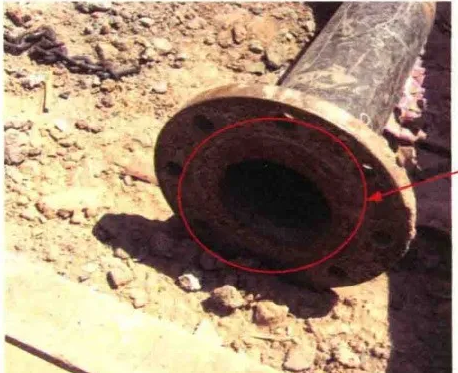
Question 7: The flange sealing surface is severely corroded.
Precast pipes were not effectively protected and were placed haphazardly on the construction site, coming into direct contact with the soil, resulting in severe corrosion on the flange surfaces.
Harm
Severe corrosion has occurred even before installation, which will affect the normal service life of the flange; corrosion on the flange sealing surface will affect the flange sealing strength, leading to media leakage after the pipeline is put into operation.
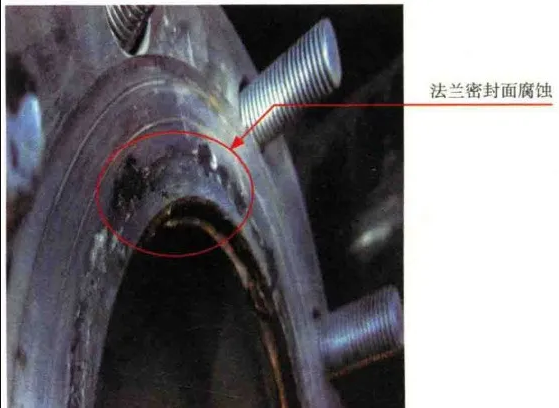
Question 8: Incorrect material selection for stainless steel flange sealing gaskets
Corrosion pits appeared on the sealing surface of the stainless steel flange.
Harm
Incorrect selection of gasket and liner materials can cause corrosion of the stainless steel flange sealing surface, resulting in water leakage, affecting the flange’s service life, and causing other losses.